For Arizona homeowners specifically, this problem hits harder than in most other states. The combination of extreme UV intensity, summer surface temperatures that can run 64°F above ambient air temperature at solar noon, and sharp day-to-night temperature swings compresses years of normal wear into a much shorter window. A roof that might last 25 years in a temperate climate often shows delamination symptoms in half that time without proactive protection.
Understanding why delamination happens — and what stops it — is the difference between a roof that lasts and one that fails years too soon.
Key Takeaways
- Delamination occurs when the internal layers of a shingle (fiberglass mat, asphalt coating, granule surface) separate and can no longer form a weather-tight barrier
- UV exposure, thermal cycling, poor attic ventilation, and installation errors are the primary causes
- Warning signs include bubbling surfaces, curling edges, and heavy granule buildup in gutters
- Unchecked delamination accelerates — deck damage, leaks, and full roof failure follow
- Stopping it requires ventilation, qualified installation, annual inspections, and a proactive shingle protection treatment
What Is Asphalt Shingle Delamination and What Causes It?
An asphalt shingle is not a single material — it's a composite of layers fused together during manufacturing: a fiberglass mat core, asphalt coating layers, and a granule surface pressed on top. These components are bonded to function as a single, unified weather barrier. Delamination is what happens when that bond fails and the layers begin to pull apart.
Once separated, the shingle can no longer seal against water, hold its position in wind, or protect the decking below. Delamination rarely traces back to a single event — it results from compounding stressors accumulating over time.
sharply accelerates oil loss compared to cooler climates.
Thermal Cycling
Shingles expand under daytime heat and contract as temperatures drop each night. Applied thousands of times over a roof's life, this repeated mechanical stress gradually overcomes the adhesive bond between layers.
NOAA's 1991–2020 climate normals for Phoenix Sky Harbor document a July average diurnal temperature range of 22°F — one of the most extreme monthly thermal-cycle ranges in the country. That 22°F daily swing compresses years of bond stress into a shorter service window for untreated shingles.
Poor Attic Ventilation
Inadequate attic ventilation traps heat directly beneath the roof deck. This "bakes" shingles from below — accelerating oil evaporation and weakening adhesive bonds at the layer interface — while amplifying the thermal cycling stress already described above.
The 2021 International Residential Code (IRC) R806.2 establishes a 1:150 base minimum net-free ventilating area (with a conditional 1:300 exception where specific intake/exhaust distribution requirements are met). In Phoenix's climate, even this minimum is critical — poor ventilation traps radiant heat even in low-humidity conditions, making ventilation a key delamination driver that's easy to overlook.
Improper Installation
Two installation errors set the stage for early delamination:
- Fasteners outside the designated nail zone — creates uneven mechanical stress at layer interfaces, particularly on steeper pitches where shingles carry more load
- Shingles installed over an uneven or moisture-exposed deck — creates flexing points that progressively fracture the internal bond
Manufacturing defects can also cause delamination in relatively young roofs, often appearing as a uniform pattern across an entire roof section rather than random isolated spots.
What Happens If Shingle Delamination Goes Unchecked
Once layers separate, the damage compounds quickly:
- Wind catches the lifted surface and accelerates further separation
- Water infiltrates between layers, reaching the underlayment and deck
- Granule protection is lost, exposing bare asphalt to direct UV
- Exposed asphalt on damaged shingles accelerates deterioration in surrounding intact shingles
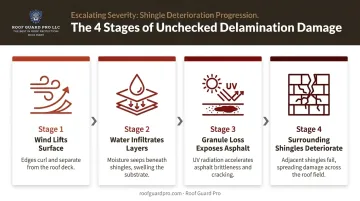
The result is a roof that fails well short of its rated lifespan.
General national averages place roof repair costs around $900, compared to approximately $10,000 for a full replacement — and Arizona re-roofs can run $10,000 to $40,000 or more depending on home size and material.
Delamination that starts in a few isolated spots can spread across a roof section within a few seasons if left untreated, turning a manageable repair into a full replacement project.
Warning Signs You May Already Have Delamination
Watch for these indicators during any visual inspection:
- Bubbling or raised surface areas — the top layer is beginning to lift from the base; may appear as shadowing or texture irregularities when viewed from the ground
- Curling or lifting at tab corners or lower course edges — a dry, brittle feel confirms oil loss and bond failure already in progress
- Heavy granule accumulation in gutters or at downspout outlets — some loss is normal on new roofs, but bare patches, thin areas across multiple courses, or accumulation after every rain event warrant a professional assessment
How to Prevent Asphalt Shingle Delamination
Prevention works as a layered strategy. No single action eliminates delamination risk, but combining ventilation, qualified installation, routine inspection, and proactive shingle treatment extends roof life by years.
Ensure Proper Attic Ventilation
Proper ventilation means a balanced intake-to-exhaust system (ridge vents paired with soffit vents) that maintains continuous airflow beneath the roof deck. This keeps shingle temperatures lower, slows oil evaporation, and prevents moisture accumulation that weakens adhesive bonds.
Ventilation should be assessed at initial installation and re-evaluated during any professional inspection. Undersized or blocked ventilation is one of the most common and correctable causes of premature shingle degradation.
Schedule Annual Roof Inspections
A professional inspection catches what a ground-level visual cannot:
- Early-stage layer separation before it's visible from below
- Granule loss patterns indicating bond weakening
- Nail zone violations creating stress points
- Deck moisture intrusion compromising shingle attachment
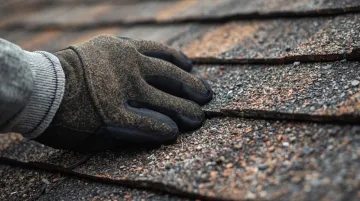
Timing matters in Arizona. Schedule inspections in late spring, before summer heat peaks and before monsoon season. Catching early signs before monsoon rains arrive significantly reduces the risk of water intrusion compounding bond failure.
Use Only Qualified Contractors for Installation and Repairs
Proper nailing (fasteners placed in the manufacturer-designated nail zone, driven flush, at the correct count per shingle) is the single most controllable factor in preventing installation-induced delamination. Overdriven or misplaced nails create stress fractures at layer interfaces that worsen with every thermal cycle.
When hiring, verify the contractor holds an Arizona ROC license and ask specifically about compliance with manufacturer installation guidelines. Non-compliant installation voids manufacturer warranties — often the homeowner's last line of defense against premature failure.
Apply a Protective Coating to Replenish Oils and Block UV Damage
Because oil loss and UV degradation are the primary chemical drivers of delamination, treating the root cause directly before symptoms appear is the most proactive prevention option available.
Roof Guard Pro (Arizona ROC# 350311), serving the Phoenix East Valley, professionally applies GoNano Shingle Saver — a nanotechnology-based coating that targets oil depletion and UV degradation directly.
Unlike traditional surface sealers that coat the shingle from above, GoNano's nanoparticles penetrate the asphalt at the pore level, replacing lost oils and forming a UV barrier from within the shingle material. The treatment:
- Restores shingle flexibility by replenishing depleted oils
- Blocks further UV photo-oxidation that drives delamination
- Adds hydrophobic and anti-moisture properties that slow granule loss
- Extends serviceable roof life by 10–15 years with a 10-year GoNano manufacturer warranty
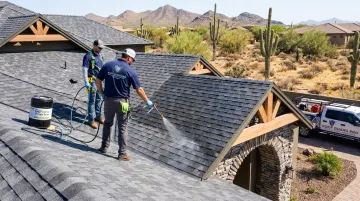
The strongest candidates are homeowners with roofs in the 10–20+ year range that still have structural integrity: no curling, no lifting, no significant granule loss. Roof Guard Pro offers free on-site estimates to assess whether your roof qualifies.
Long-Term Maintenance Tips to Keep Delamination at Bay
Consistent habits between professional inspections make a real difference:
- Trim overhanging branches that shade the roof and trap moisture, or physically abrade granules during windy conditions
- Keep gutters clean and flowing — blocked gutters cause water to back up under shingle courses, accelerating moisture-related bond failure
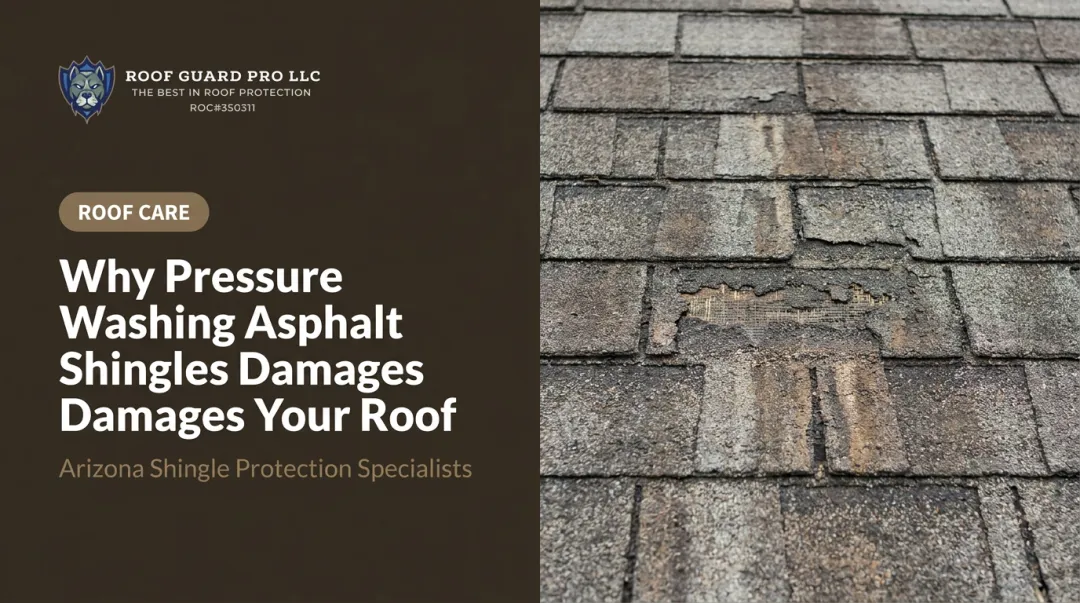
- Avoid power washing the roof surface — high-pressure water strips granules and drives moisture between shingle layers, weakening adhesive bonds over time
- Document each inspection with photos and written notes — a year-over-year visual record makes it easier to detect progression and supports insurance or warranty claims when needed
Conclusion
Asphalt shingle delamination has well-understood causes — and each one has a corresponding prevention action you can take before damage becomes expensive. UV-driven oil loss is addressable with protective coatings. Thermal cycling stress is mitigated by proper ventilation. Installation errors are preventable by using licensed, qualified contractors. Early detection through annual inspections catches problems while they're still manageable.
That's especially true in Arizona, where UV intensity and heat cycling accelerate shingle degradation faster than most climates. Taking those steps now — ventilation, professional inspections, quality installation, and a treatment like GoNano Shingle Saver — can add 10–15 years to a structurally sound roof at a fraction of the $10,000–$40,000+ cost of a full replacement.
Frequently Asked Questions
What causes asphalt shingles to delaminate?
Delamination results from the breakdown of the adhesive bond between shingle layers, most commonly driven by UV exposure depleting shingle oils, repeated thermal expansion and contraction, poor attic ventilation trapping heat beneath the deck, and installation errors that create mechanical stress points at layer interfaces.
What is the life expectancy of asphalt shingles?
Most asphalt shingles carry 25-year limited warranties for 3-tab products, with lifetime-limited coverage on some architectural lines — but these are warranty terms, not guaranteed field lifespans. In Arizona's intense UV and heat environment, untreated shingles often underperform their warranty terms without proactive maintenance and protection.
How much granule loss is too much for asphalt shingles?
Some granule loss in the first months after installation is normal. Manufacturers like GAF identify this as excess "riders" shed during the break-in period. What warrants concern is large bare patches exposing dark asphalt, widespread thin or smooth areas across multiple courses, or heavy granule deposits consistently appearing in gutters after rain.
Can delaminated shingles be repaired, or do they need to be replaced?
Isolated delamination on an otherwise structurally sound roof may be addressable with targeted repairs. Widespread delamination, particularly on older roofs with curling, lifting, or significant granule loss, typically means shingles have reached end of serviceable life, and either full replacement or a professional condition assessment is needed.
How does poor attic ventilation cause shingle delamination?
Without adequate airflow, heat trapped beneath the roof deck bakes shingles from below, accelerating oil evaporation that dries and hardens the asphalt layer and weakens the bond between shingle layers. That same trapped heat also intensifies thermal cycling stress, mechanically fatiguing those bonds over time.
Can a protective coating prevent asphalt shingle delamination?
A nanotechnology-based coating applied to structurally intact shingles can replenish lost oils, seal the surface against UV penetration, and significantly slow the degradation process that leads to delamination. For aging roofs that don't yet show curling or lifting, it's one of the most cost-effective proactive measures available, and far less expensive than replacement.