Introduction
You're cleaning out the gutters after a storm and notice something odd: dark, sand-like grit collecting in clumps near the downspout. It looks like coffee grounds, but it's actually pieces of your roof.
That grit is called granule loss, and it's one of the most common signs of shingle wear that homeowners encounter. It's also one of the most misunderstood.
Not every pile of granules means your roof is dying. Some shedding is completely normal, especially on a newer roof. But excessive or patchy loss can be an early warning sign of bigger problems ahead.
This guide breaks down why granules matter and what causes them to loosen. You'll also learn how to spot a real problem versus normal wear, plus the proactive steps (including protective treatments) that can add years to a shingle roof's life without a full tear-off.
TL;DR
- Granules shield shingles from UV rays, water, and fire damage, and losing them speeds up asphalt deterioration.
- Common causes: natural aging, severe weather, poor installation, and manufacturing defects.
- A little shedding is normal on new roofs; excessive or patchy loss signals a real problem.
- Ignoring granule loss accelerates leaks, curling, and premature roof failure.
- Regular inspections and protective coatings like GoNano Shingle Saver can extend shingle life without a full replacement.
Common Causes of Granule Loss
Granules are the small, ceramic-coated mineral particles embedded in the top layer of asphalt shingles. They do more than give your roof its color. According to the Asphalt Roofing Manufacturers Association, these granules add UV protection and durability, while the asphalt underneath handles the actual water-shedding.
When granules loosen and wash away, that asphalt loses its shield. Here's what typically causes it.
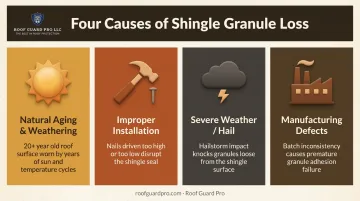
Cause 1: Natural Aging and Weathering
Over time, sun exposure and constant heating-cooling cycles weaken the bond between asphalt and granules. In Arizona, where summer roof surfaces can reach well over 150°F, this breakdown happens faster than in milder climates.
Typical scenario: A roof between 15 and 20+ years old sheds granules fairly evenly across the whole surface. Homeowners usually notice it first as sediment building up in the gutters, not as a visible bald spot on the shingles themselves.
Cause 2: Improper Installation
Cut corners during the original install can cause premature, uneven granule loss. Common culprits include:
- High or misplaced nailing that penetrates the shingle's self-sealing strip
- Poor sealing that leaves shingles vulnerable to wind lift
- Mismatched shingle batches with inconsistent granule adhesion
Typical scenario: Bald patches show up well before the roof's expected lifespan, often clustered in specific areas rather than spread evenly. These patches sometimes come paired with hidden issues like trapped moisture underneath.
Cause 3: Severe Weather (Hail, Wind, Heavy Rain)
Hail impact and wind-driven rain can physically knock granules loose. A widely cited Haag Global hail-damage engineering study found that aged shingles are far more vulnerable than new ones. In testing, hail as small as 1 inch damaged aged organic-mat shingles in half the impacts. Newer fiberglass shingles held up better, requiring larger stones to sustain similar damage.
Typical scenario: Granules appear in gutters in noticeable spikes right after a storm. If the damage includes actual bruising or punctures in the shingle mat (not just displaced granules), it may qualify for insurance coverage.
Cause 4: Manufacturing Defects and Poor-Quality Materials
Low-grade asphalt or production anomalies can cause blistering, flaking, or accelerated granule loss tied to a specific shingle batch. Manufacturer recalls exist for exactly this reason: certain product runs simply don't hold up as promised.
Typical scenario: Granule loss shows up alongside small bubbles or blisters on the shingle surface, sometimes following a pattern that matches the installation offset. This is rarer than aging or weather-related loss, but worth flagging to a professional if the pattern looks unusual.
What Happens If Granule Loss Is Ignored
Once granules wear away, the asphalt underneath has nothing protecting it. Exposed asphalt dries out and cracks under constant UV exposure. From there, it's a fairly predictable downward spiral:
- Cracked asphalt lets water in, especially during monsoon season.
- Water intrusion leads to wood rot in the roof deck.
- Trapped moisture creates conditions for mold in the attic.
- What started as a maintenance issue becomes a structural repair.
That progression matters because of what it costs. A full asphalt shingle roof replacement in the Phoenix area typically runs $7,600 to $9,500 for a standard project, according to Angi's Phoenix cost data. Costs can climb well past that, depending on roof size and complexity. Catching granule loss early, before it turns into deck damage, is almost always the cheaper path.
Warning Signs You're About to Experience Excessive Granule Loss
Spotting these early keeps a small issue from becoming an expensive one:
- Dark, sand-like buildup in gutters or downspouts after rain
- Patchy, discolored, or shiny "bald" spots on the shingle surface
- Curling, cracking, or blistering combined with visible thinning
- Roof age past 15-20 years, paired with accelerating granule loss
How to Prevent and Address Granule Loss
Prevention combines routine upkeep with, when the timing is right, a protective treatment that buys the roof more years.
Schedule Regular Roof Inspections
Have a professional visually check the roof at least once a year and immediately after major storms. This catches early bald spots or blistering before they spread across the whole surface.
When: Annually, plus right after hail or high-wind events.
Keep Gutters and Downspouts Clear
Clean gutters routinely and pay attention to how much granule sediment collects after storms. Clogged gutters cause water backup, which worsens already-thin, exposed areas of the roof.
When: Seasonally, or after any heavy storm.
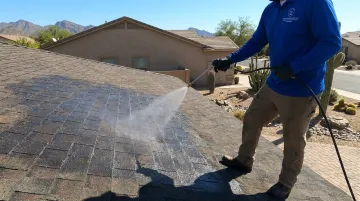
Apply a Professional Nanotechnology Protective Coating
For roofs that still have structural integrity but show visible granule thinning or UV-related oil loss, a certified treatment like GoNano Shingle Saver can restore flexibility and weather resistance. It replaces the natural oils lost from aging shingles and adds a permanent UV shield.
Roof Guard Pro applies this treatment across the Phoenix East Valley, and it's designed for shingles roughly 12 to 20+ years old that are still flat and intact on the deck. It's not a fix for shingles that have already curled, lifted, or lost their granular structure entirely.
At that point, a full replacement is the honest recommendation. One application comes backed by a 10-year GoNano manufacturer warranty, at a fraction of the cost of a full re-roof.
When: As soon as thinning or early UV damage shows up, before shingles start to curl or crack.
Address Attic Ventilation and Heat Buildup
Proper attic airflow reduces trapped heat under the roof deck. The Asphalt Roofing Manufacturers Association notes that a poorly ventilated attic can hit 140°F on a 90°F day, and that combined heat and moisture accelerates shingle deterioration.
When: During any roof inspection, or before peak summer heat sets in.
Tips for Long-Term Prevention and Control
A little record-keeping goes a long way toward protecting your investment:
- Keep a simple maintenance log: dates of inspections, gutter cleanings, and any repairs performed.
- Photograph roof condition each season: gradual changes are easier to spot in photos than from memory, and this documentation helps if you ever file a storm-related insurance claim.
- Compare coating costs against replacement costs: weigh a single treatment, like a GoNano Shingle Saver application, against the cost and disruption of a full tear-off.
Conclusion
Granule loss stems from a handful of identifiable causes: ordinary aging, installation shortcuts, severe weather, and occasional manufacturing flaws. Most cases are manageable with routine checks, and catching the problem early rarely means a full roof replacement is the only option.
Proactive steps, whether that's a yearly inspection or a protective treatment on a still-sound roof, tend to cost far less than reactive repairs down the line. If you're staring at granules in your gutter and wondering what's next, a professional assessment from Roof Guard Pro is the fastest way to find out where your roof actually stands.
Frequently Asked Questions
Does granule loss on shingles mean I need a new roof?
Not necessarily. Uniform, gradual loss on a structurally sound roof can often be addressed with protective treatments. Severe bald spots or curling shingles, however, usually point toward replacement.
How much granule loss on shingles is too much?
Light shedding right after installation or a few granules in the gutter is normal. Large piles, visible bald patches, or discolored sections mean it's time for an inspection.
Why are my shingles losing granules?
The main causes are natural aging, severe weather, improper installation, and manufacturing defects. A professional inspection can usually pinpoint which one applies to your roof.
Can granule loss be repaired without replacing the entire roof?
Often, yes. Isolated loss on an otherwise healthy roof can be treated with a protective coating treatment such as GoNano Shingle Saver. Widespread loss on an older roof usually calls for full replacement instead.
How can I tell if my roof has granule loss without climbing on it?
Check gutters and downspouts for granule sediment after storms, and view the roof from the ground with binoculars for discolored or bald patches. Both are safe, no-ladder-required checks.
Does insurance cover granule loss from storm damage?
Granule loss tied to a documented hail or wind event may qualify for coverage. Loss from normal aging typically doesn't, which is why a professional damage assessment matters before filing a claim.