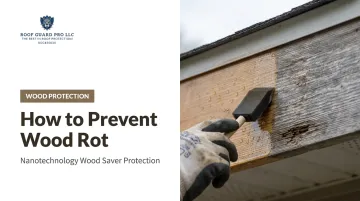
The culprit isn't the weather report. It's the localized wetting most people never notice: a sprinkler head hitting the same fence post every night, a low spot in the yard, a coating that quietly wore away years ago.
Phoenix only sees 7.22 inches of rain annually, but monsoon storms deliver roughly half to three-quarters of that total in short, intense bursts across central and southern Arizona, according to the Arizona State Climate Office. That's enough moisture, combined with irrigation and poor drainage, to start fungal decay in exposed wood.
This guide breaks down what actually causes wood rot, the warning signs to catch early, and the prevention steps that work in a climate like ours, including long-term coating options for structures already in the ground.
Key Takeaways
- Wood rot needs moisture, oxygen, warmth, and wood fiber — eliminate the moisture and the fungus dies
- Sprinkler overspray and poor drainage cause most Arizona wood rot, not rainfall
- Watch for soft or spongy wood, dark staining, and peeling finish as early warning signs
- Sealing end grain, using borate preservatives, and applying protective coatings prevent rot at every stage
- Inspect after monsoon season to catch wood rot problems while repairs are still cheap
Common Causes of Wood Rot
Wood rot is fungal decay. Microscopic spores land on wood, find a moisture source, and start breaking down the fibers that give lumber its strength. Left alone, this process doesn't stop until the wood is gone.
You'll sometimes hear the terms "wet rot" and "dry rot" used loosely. In reality, both require wet wood to get started — "dry rot" is simply the name for a specific brown-rot fungus that can later spread through drier wood after the initial soaking. There's no such thing as rot without moisture at some point in the process.
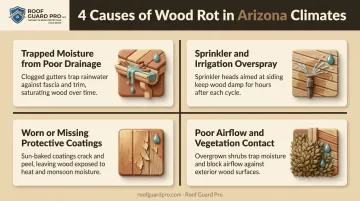
Nearly every case of exterior wood rot traces back to one of four root causes.
Cause 1: Trapped Moisture From Poor Drainage
Standing water is fungus's best friend. Clogged gutters, poor yard grading, or missing flashing keep wood saturated far longer than it should be.
A common example: fence posts set in a low-lying corner of the yard, or a deck ledger board attached to the house without proper flashing behind it. Water works its way in and never fully dries out between storms. Within a season or two, the wood at ground level turns soft and dark, a telltale sign decay has already set in.
Cause 2: Sprinkler and Irrigation Overspray
This is the single most distinctly Arizona cause on this list. Automatic irrigation systems that clip a fence base or deck post every single day create a moisture problem no amount of dry desert air can fix.
InterNACHI's inspection guidance specifically flags sprinklers that regularly wet a deck as a documented decay risk. The damage often goes unnoticed for months because nobody's watching the sprinkler run at 4 a.m.
Cause 3: Worn or Missing Protective Coatings
Paint and stain aren't decorative extras. They're the barrier standing between wood fibers and water. Once that film cracks, peels, or wears thin from UV exposure, water gets direct access to the fibers underneath.
A pergola that hasn't been restained in several years is the classic case: graying wood, cracking at the joints, and rough, weathered cut ends where the coating gave out first.
Cause 4: Poor Airflow and Vegetation Contact
Wood needs to dry out between wetting events. Shrubs, vines, or mulch piled against a fence line trap humidity right at the surface and block the airflow that would otherwise let the wood breathe.
Typical scenario: overgrown landscaping pressed against a section of fence, keeping it perpetually damp long after the rest of the yard has dried. Left unchecked for a year or two, that section often turns spongy well before the boards around it show any wear.
What Happens If Wood Rot Is Ignored — and Warning Signs to Watch For
Rot doesn't stay contained. Once fungus establishes itself, it spreads to adjoining framing members, and structural strength drops fast — research from the USDA Forest Products Laboratory shows toughness can fall over 50% with just 10% wood weight loss from decay.
That means a $300 fence repair can turn into a full section replacement. A deck ledger issue can escalate into collapse risk. The gap between "minor fix" and "total rebuild" is often just a few missed seasons.
Warning Signs Worth Acting On
Catching these signs early is the difference between a patch job and a rebuild:
- Soft or spongy wood: press a screwdriver into the surface; sound wood resists, decayed wood gives way easily
- Discoloration: dark staining, or gray and white patches, especially with a musty smell
- Failing finish: paint or stain peeling, cracking, or forming a checkered, cube-like pattern on the surface
If you spot any of these on a fence post, deck board, or pergola beam, treat it as a moisture problem first. Fixing the source stops the spread before it reaches the next board.
How to Prevent Wood Rot
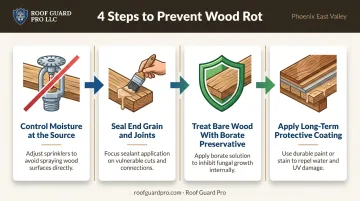
Prevention works in layers. First, eliminate the moisture source. Then block water absorption at the points where wood is most vulnerable.
Prevention Measure 1: Control Moisture at the Source
This directly addresses the two most common Arizona causes — drainage and irrigation.
- Redirect or adjust sprinkler heads so spray never hits fence bases, deck posts, or siding
- Fix yard grading issues that let water pool near wood structures
- Clean gutters regularly so runoff doesn't collect at the foundation or deck ledger
Prevention Measure 2: Seal End Grain and Exposed Joints
End grain is the exit and entry point for water in any piece of lumber. Research from the USDA Forest Products Laboratory shows end grain can absorb water 10 to 100 times faster than the flat face of a board.
Apply exterior wood glue or sealant to every cut end and joint during construction or repair. This is easiest to do before installation, while the wood is still accessible on all sides.
Prevention Measure 3: Treat Bare Wood With a Borate-Based Preservative
New fence posts, deck framing, and other structural lumber should get a borate treatment before they're enclosed or finished. Borates kill fungal spores and deter wood-destroying insects while the wood is still exposed and easy to treat.
This step only works during initial construction or a major repair. Once wood is sealed or buried, it's no longer practical.
Prevention Measure 4: Apply a Long-Term Protective Coating for Existing Wood
New wood is easy to protect from the start. Existing decks, fences, and pergolas need a different approach, since you can't re-treat the end grain or apply borates after the fact.
This is where a nanotechnology coating like GoNano Wood Saver comes in. Instead of sitting on top of the wood like paint, it penetrates the grain and forms a barrier that repels water, UV rays, dirt, mold, and mildew, without hiding the natural wood grain the way opaque stains do.
| Factor | GoNano Wood Saver | Pressure Washing & Re-Staining |
|---|---|---|
| Reapplication | Single application, long-term barrier | Every 12–24 months |
| Fading | Holds color evenly | Fades unevenly between sun and shade |
| Moisture protection | Resists warping and cracking | Doesn't stop moisture-driven warping |
| Appearance | Natural grain stays visible | Can look uneven; polyurethane peels in Arizona sun |
Roof Guard Pro is an Arizona-licensed applicator (ROC# 350311) serving Mesa, Chandler, Gilbert, Scottsdale, and Tempe. Rather than guessing at square footage over the phone, the team offers free onsite estimates, evaluating the wood's condition before quoting a price based on the actual scope of work.
Tips for Long-Term Prevention and Control
Prevention works best as an ongoing habit, not a one-time task. The right schedule depends on what you're maintaining.
- Inspect seasonally: check wood structures right after monsoon season and again before peak summer heat, when UV exposure is most intense
- Match your maintenance schedule to your product: traditional stains typically need reapplication every 1-2 years, while protective coatings last far longer without recoating
- Photograph wood condition annually: a simple habit that documents changes over time and helps catch slow-developing problems
This last tip matters most for HOAs and property managers tracking multiple structures across a portfolio. A photo log turns "does this fence look worse than last year?" into an actual comparison instead of a guess.
Conclusion
Wood rot in Arizona almost always comes back to the same handful of causes: standing water, sprinkler overspray, a worn coating, or vegetation trapping moisture against the wood. None of them are mysterious. Each one is preventable with the right maintenance schedule.
Catching the early signs (soft spots, discoloration, a failing finish) turns a potential rebuild into a quick fix. Treating the problem proactively, whether that means redirecting a sprinkler head or applying a long-term coating, costs a fraction of what full replacement runs.
If you're in the Phoenix East Valley and want a professional opinion on your deck, fence, or pergola, Roof Guard Pro can help. We offer free onsite estimates and GoNano Wood Saver application at (480) 878-2238 or info@roofguardpro.com.
Frequently Asked Questions
What is the best treatment to protect wood from rot?
A combination of moisture control and a quality protective product works best. Borate preservatives suit new or bare wood, while a nanotechnology coating like GoNano Wood Saver protects wood that's already installed.
Can wood rot be reversed once it starts?
No. Active rot can't be undone, but damaged sections can be cut out and repaired with wood consolidants or epoxy fillers. A borate treatment on the remaining wood stops the fungus from spreading further.
How long does it take for wood to rot in a dry climate like Arizona compared to humid regions?
Rot progresses much slower here. USDA decay-hazard data rates Phoenix at 9.0 versus Miami's 145.9, but localized moisture from sprinklers or poor drainage can still cause noticeable rot within just a few years.
Does painting wood really prevent rot?
An intact paint or stain film sheds water effectively. The problem starts once it cracks or peels — at that point, it traps moisture against the wood instead of blocking it, which is why regular inspection and recoating matter.
How often should exterior wood be treated or resealed?
Traditional stains typically need reapplication every 1-2 years. GoNano Wood Saver is applied once and is designed to eliminate that recurring maintenance cycle entirely.
Is wood rot damage covered by homeowners insurance?
Usually not. Most standard policies exclude gradual deterioration like wood rot since it's classified as a maintenance issue rather than a sudden loss. Repair costs climb quickly once rot spreads, making prevention and early detection a financial priority as well as a cosmetic one.