Introduction
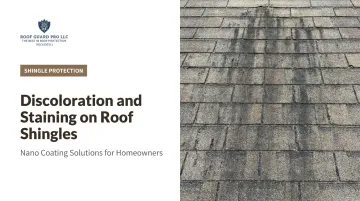
You walk outside, look up, and notice it: dark streaks running down your roof, or patches that look faded compared to the rest. The first thought for most homeowners is "I need a new roof." Take a breath: that's rarely the case.
Most shingle discoloration is cosmetic. It comes from algae, sun damage, rust, or plain old dust. The real question isn't whether your roof looks different. It's whether that discoloration is paired with actual damage.
This guide breaks down what causes shingle staining, which warning signs actually matter, and how professional treatments, including GoNano Shingle Saver, can restore your roof's appearance without the cost of a full replacement (often $10,000 to $40,000 or more in Arizona).
Key Takeaways
- Algae, UV oxidation, rust, and dust each leave a distinct stain type
- Arizona's intense sun accelerates fading and oil loss faster than humid climates
- Discoloration alone rarely signals roof failure; granule loss, curling, and brittleness do
- Nanotechnology coatings restore appearance and add years of life at a fraction of replacement cost
Common Causes of Roof Discoloration and Staining
Shingle discoloration covers any visible change from the roof's original color: streaking, spotting, dulling, or blotchy patches. It stems from biological growth, chemical reactions, or plain environmental buildup.
In Arizona, sun and dust do more damage than the humidity-driven algae problems you'd see in the Southeast or Midwest. That changes which causes homeowners here should watch for first.
Algae and Organic Growth
Blue-green algae, most commonly Gloeocapsa magma, is one of the most frequent causes of roof discoloration nationwide. It travels on the wind and settles on roofing surfaces, where it thrives in moisture according to the Asphalt Roofing Manufacturers Association.
Here's the good news: algae streaking is almost always cosmetic. Owens Corning notes that algae discoloration doesn't affect shingle performance on its own.
In Arizona's dry heat, widespread algae growth is less common. You'll still see it in specific spots:
- Near irrigation systems or sprinklers that keep shingles damp
- Around pool areas with higher ambient humidity
- On heavily shaded, north-facing roof sections that dry slowly
UV Oxidation, Roof Age, and Fading
Arizona sun is relentless, and shingles pay the price. UV exposure triggers photo-oxidation, a chemical process that breaks down the oils in asphalt shingles and lifts pigment from the surface. The result is a gray, washed-out streaking pattern homeowners often notice on shingles that are 15 years old or older.
Roofers sometimes call this fading pattern "extractive bleeding," though there's no single industry-wide definition of the term. What's consistent is the mechanism: sun and heat pull moisture and oils out of the asphalt over time, and the shingle's surface changes color as a result.
The National Roofing Contractors Association lists local climate and environmental exposure among the key factors that determine how long a roof actually lasts. That's exactly why a 20-year shingle in Phoenix may show its age faster than the same shingle in a milder climate.
Rust Stains
Brown or orange streaks running down a roof slope usually trace back to corroding metal: flashing, vent pipes, or a rooftop HVAC unit. As these components age, rust forms and washes down the shingle surface every time it rains.
This one's worth taking seriously. Roof penetrations must stay properly sealed to keep water out, and openings or gaps in flashing are a known path for leaks. A rust stain by itself isn't proof of a leak, but it's a signal to have the flashing checked before a cosmetic issue becomes a moisture problem.
Dust, Debris, and Environmental Buildup
Arizona's dust storms are a documented, recurring weather pattern. A Maricopa County analysis identified 471 dust storms between 2005 and 2018, with the majority hitting during summer afternoons and evenings.
That airborne dust settles into shingle granules, dulling color and creating localized dark patches after rain washes it into uneven concentrations. Add in:
- Pollen buildup during spring months
- Tree debris from overhanging branches
- Bird droppings that trap moisture and organic material
Each of these compounds the staining over time, especially in shaded or low-airflow roof sections.
What Happens If Discoloration Is Ignored
Most staining won't hurt your roof on its own. But neglect has a way of compounding. When discoloration shows up alongside granule loss, the shingle's asphalt layer loses its UV shield. Exposed asphalt dries out and becomes brittle faster, which shortens the roof's usable life.
Rust and organic growth near flashing carry a separate risk. Left alone, corrosion can eventually compromise the seal around vents and penetrations, creating a moisture pathway you won't notice until there's a stain on your ceiling.
Warning Signs Your Roof Needs Attention
Discoloration by itself usually just means "clean it or coat it." These signs mean something more:
- Granule loss: showing up in gutters, downspouts, or as bald patches on the shingle surface
- Curling or cracking, especially brittle, lifted edges appearing alongside the staining
- Stains that keep spreading across roof sections even after you've tried cleaning them
If you're seeing one or more of these paired with discoloration, it's time for a professional inspection, not a garden hose.
How to Prevent and Treat Roof Discoloration
Prevention in Arizona means combining routine upkeep with treatments built for extreme sun exposure. Here's how each layer works.
Regular Roof Cleaning and Debris Removal
Cleaning removes surface algae and dirt, but the method matters more than most homeowners realize. The Asphalt Roofing Manufacturers Association recommends a 50:50 mix of chlorine bleach and water, applied and rinsed at low pressure. It explicitly warns against pressure washing, which strips protective granules and can cause premature shingle failure.
Beyond cleaning, trim overhanging branches to reduce trapped debris and moisture, and clear gutters seasonally, especially before Arizona's monsoon season.
Copper and Zinc Strips for Algae Control
Ridge-installed copper or zinc strips release metal ions during rainfall that inhibit algae regrowth on the slope below them. Algae-resistant shingles, which use copper-infused granules, are also worth considering for future roof replacements, particularly on shaded or north-facing sections prone to organic growth.
One caution: retrofitting strips onto an existing roof isn't always advisable, since the installation can disturb existing seals. This is a conversation to have with a roofing professional, not a weekend DIY project.
Address Rust Sources Early
Corroding flashing, vent boots, and rooftop fixtures are fixable, but only if you catch them early. Watch for streaks of orange or brown near vents, flashing, or fasteners; these often signal that a metal component has started to rust.
Arizona's dry climate keeps rust less common than in humid regions, but monsoon storms accelerate corrosion on already-weakened metal. Annual inspections, ideally scheduled after monsoon season, let you replace a small corroded component before rust spreads across a larger roof section or compromises a seal.
Apply a Nanotechnology Protective Coating
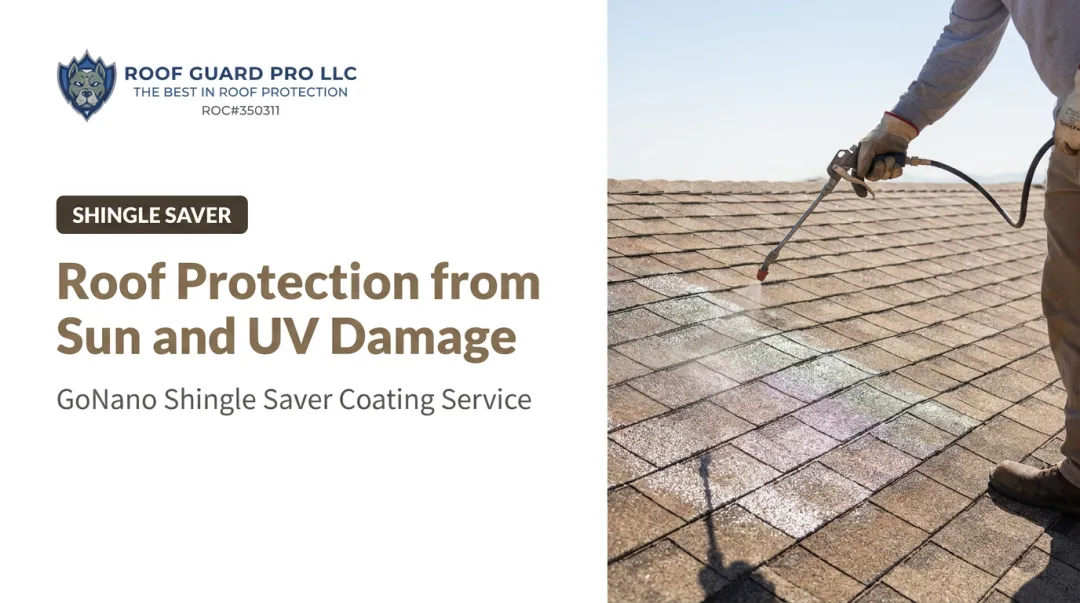
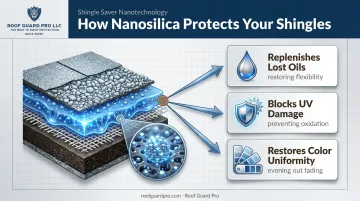
For roofs that are structurally sound but visually tired, this is where GoNano Shingle Saver comes in. Instead of sitting on the surface like a traditional sealant, its nanosilica particles penetrate deep into the asphalt's pore structure.
Here's what that means in practice:
- Replenishes lost oils: re-saturates the asphalt from within, restoring flexibility that aging and sun exposure strip away
- Blocks ongoing UV damage: creates a permanent barrier against the oxidation that causes fading and brittleness
- Restores color uniformity: evens out the sun-bleached, patchy look that comes from uneven oxidation across the roof
A single application comes backed by a 10-year manufacturer warranty and can add 10 to 15 years of usable life to shingles that still have structural integrity. Compare that to a full Arizona re-roof, which commonly runs $8,856 on average in Phoenix and can climb toward $40,000 or more for larger or more complex roofs. The math starts to make sense.
Not every roof qualifies. Roof Guard Pro's technicians run a free onsite assessment first, checking for curling, lifted shingles, or granule loss severe enough to rule out coating. If your roof passes that check, you get a straightforward quote based on square footage and condition. If it doesn't, you'll hear that too: no upsell, no coating applied to a roof that won't hold it.
Protecting Your Investment for the Long Term
A roof that looks a little tired isn't automatically a roof that needs replacing. Protecting your investment comes down to consistency:
- Schedule annual or biannual inspections to catch algae, rust, or granule loss before they escalate into structural problems
- Keep a simple maintenance log (cleaning dates, inspection notes, treatments applied), useful for warranty claims and resale value down the line
- Get a second opinion before committing to a re-roof. If the shingles are still structurally sound, a free onsite estimate from Roof Guard Pro, a certified GoNano applicator, can tell you whether restoration makes more sense than replacement
Serving Mesa, Chandler, Gilbert, Scottsdale, Tempe, and the surrounding East Valley, Roof Guard Pro's assessments are free and come with no obligation to move forward.
Conclusion
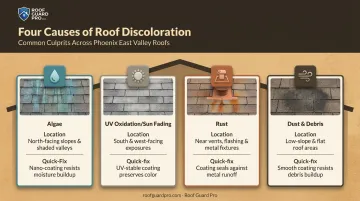
Discolored shingles usually point to one of four causes: algae, UV oxidation, rust, or debris buildup. Each has a specific fix, and none of them automatically means "replace the roof."
Proactive cleaning, timely inspections, and protective treatments like GoNano Shingle Saver can restore your roof's appearance and extend its life — often making a costly replacement unnecessary. If you're not sure which category your roof falls into, a free onsite estimate is the fastest way to find out.
Frequently Asked Questions
What causes discoloration on roof shingles?
Algae, UV/sun oxidation, rust from metal fixtures, and dirt or debris buildup are the leading causes. Climate plays a big role in which one is most likely on your roof : Arizona's dry heat favors sun fading and dust over algae.
What do bad asphalt shingles look like?
Look for curling or cupped edges, bald patches where granules have worn away, cracking, and dark streaking that won't wash off. These signs, especially in combination, point to deterioration beyond cosmetic staining.
Is roof discoloration a sign I need a new roof?
Usually not. Discoloration alone is typically cosmetic. Replacement becomes necessary only when it's paired with granule loss, curling, or other structural damage.
Can I remove algae stains from my shingles myself?
Skip the pressure washer; it strips granules and can shorten your roof's life. Use a manufacturer-approved soft-wash solution or hire a professional cleaning service instead.
How much does it cost to fix roof discoloration in Arizona?
Costs vary by method: cleaning is the cheapest option, protective coatings like GoNano Shingle Saver cost a fraction of replacement, and full re-roofs in Arizona typically run $10,000 to $40,000 or more.
Does rust on my roof mean I need a new roof?
Not usually. Rust typically comes from corroding flashing or vents, not the shingles themselves, and is often fixable by replacing the corroded metal component before it affects the seal.