Introduction
Your shingles are graying, curling at the edges, and shedding granules into the gutters. The knee-jerk reaction is to assume you need a brand-new roof. But that assumption could cost you tens of thousands of dollars you didn't need to spend.
Full roof replacement isn't cheap. The 2025 Zonda/JLC Cost vs. Value Report puts the national average asphalt-shingle replacement project at $31,871, up from $30,680 in 2024. In Arizona, where relentless heat and UV exposure speed up shingle deterioration, homeowners often face this decision earlier than most.
Roof restoration offers a middle path. This guide covers what restoration actually is, how it stacks up against replacement, what the process looks like, the real benefits, and how to pick a contractor who won't oversell you.
Key Takeaways
- Restoration renews shingles in place; replacement tears everything off and starts fresh
- Arizona's heat and UV exposure strip natural oils from shingles, causing brittleness
- Full replacement averages $10,000–$40,000+ in Arizona; restoration costs a fraction of that
- GoNano Shingle Saver treatments can add 10-15 years of usable roof life
- A professional inspection determines which option fits your roof best
What Is Roof Restoration?
Roof restoration renews an existing roof's protective qualities without a full tear-off. It sits between two other terms homeowners often confuse:
- Repair fixes an isolated problem, like one damaged shingle or a small leak
- Restoration treats the entire roof surface to renew its condition
- Replacement removes everything and installs a completely new roof system
Restoration methods vary by roof type. Flat and commercial roofs often use elastomeric coatings. Residential asphalt shingle roofs, on the other hand, are typically treated with shingle rejuvenation products or nanotechnology-based coatings.
Why Shingles Age Faster in Arizona
Asphalt shingles contain oils that keep them flexible. Heat pushes those oils toward the surface, where they evaporate or photo-oxidize. CertainTeed notes that combined high heat and intense UV exposure accelerate weathering, curling, and granule loss in shingle roofs. Once those oils are gone, shingles become brittle and start cracking.
Nanotechnology as a Modern Fix
This is where treatments like GoNano Shingle Saver come in. Unlike surface-level sealants, its nanosilica-modified particles penetrate deep into shingle pores. The treatment replenishes lost oils and forms a permanent UV-protective barrier, all while preserving the shingle's natural look.
Roof Guard Pro, a certified GoNano applicator serving Mesa, Chandler, Gilbert, Scottsdale, and Tempe, applies this treatment exclusively to residential shingle roofs that still have structural integrity. If your shingles are cracking or shedding granules but the roof deck underneath remains sound, this treatment can add years of protection.
Signs Your Roof Is a Good Candidate for Restoration
Not every aging roof needs a full teardown. Here's what typically qualifies a roof for restoration:
- Age of 10+ years, with the strongest restoration candidates typically falling in the 12–20 year range
- Graying or lightly curling shingles with no structural damage underneath
- Minor granule loss without exposed asphalt mat
- One or two small, isolated leaks rather than widespread moisture intrusion
Red flags that rule out restoration and point toward replacement instead:
- Widespread active leaks across multiple areas of the roof
- Saturated or rotting decking beneath the shingles
- Visible structural sagging in the roofline
- Extensive granule loss with exposed asphalt mat visible
If shingles have curled, lifted, or shed their granules extensively, coating them won't help.
A free onsite inspection beats guesswork every time. Roof Guard Pro's technicians assess each roof honestly, telling homeowners upfront whether restoration will work rather than applying a treatment that's destined to fail.
Roof Restoration vs. Roof Replacement
The core difference is simple: restoration treats existing materials in place, while replacement tears everything off and starts over.
| Factor | Roof Restoration | Roof Replacement |
|---|---|---|
| Upfront Cost | A fraction of replacement cost | $10,000–$40,000+ for a typical Arizona home |
| Time to Complete | Hours to a single day | Often 1–2+ days depending on size and crew |
| Disruption Level | Minimal, crew treats surface in place | Higher, involves tear-off, debris, and noise |
| Environmental Impact | No tear-off waste sent to landfill | Old shingles typically discarded |
| Warranty Length | Up to 10 years, backed by manufacturers such as GoNano | Varies by manufacturer, often 20–30+ years |
| Best-Fit Scenario | Structurally sound roof with surface wear | Structural damage, widespread leaks, roof age 20+ |
A simple way to decide: if your roof is structurally sound with isolated wear, restoration usually makes sense. If there's widespread structural damage or ongoing moisture intrusion, replacement is the safer long-term call. No coating can fix a compromised deck.
The Roof Restoration Process: What to Expect
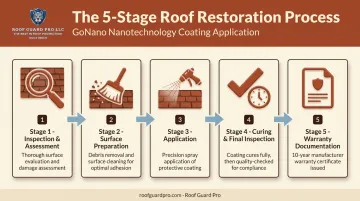
Here's how a professional restoration typically unfolds, from first visit to final sign-off.
- Inspection & Assessment: A contractor evaluates shingle flexibility, granule adhesion, and overall structural integrity. This step determines whether your roof is a genuine candidate or better suited for replacement.
- Surface Preparation: Before any product goes down, the crew clears debris and addresses minor spot repairs, so the treatment can bond evenly across the roof.
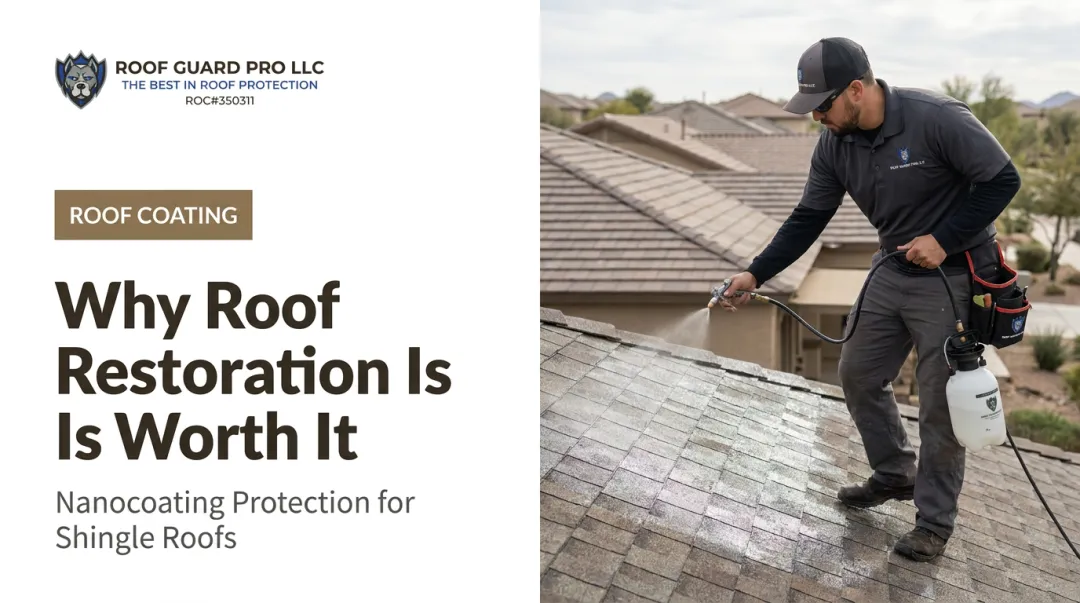
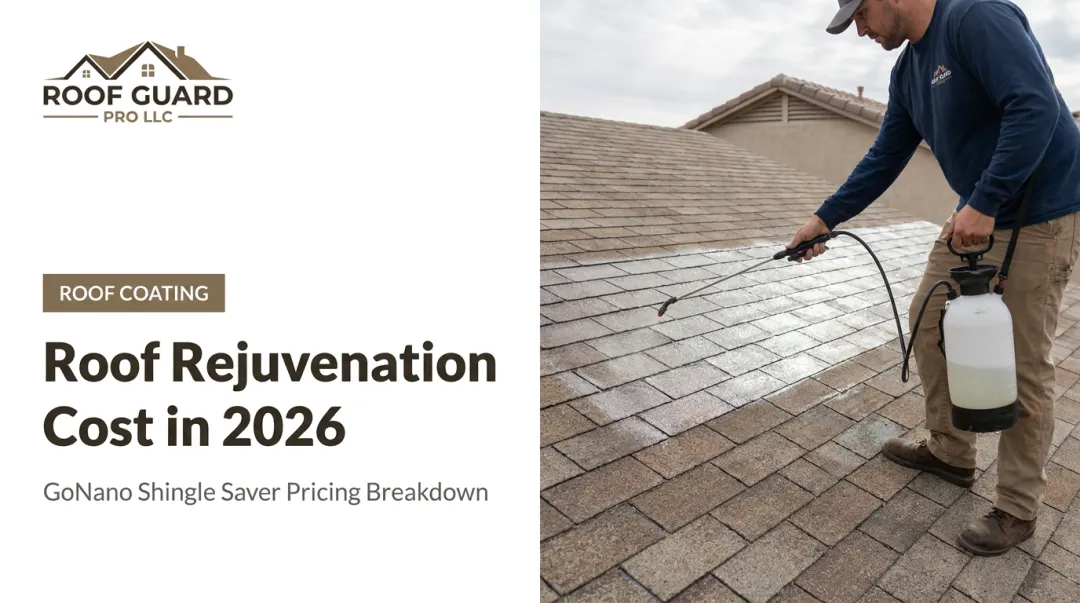
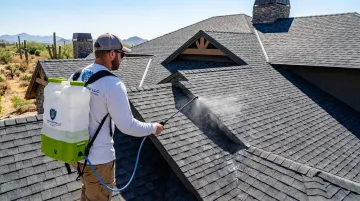
- Application: The restoration product is professionally sprayed across the entire shingle surface. With nanotechnology treatments like Shingle Saver, this means microscopic particles penetrating deep into the shingle rather than just coating the top.
- Curing & Final Inspection: The treatment needs time to set before the crew walks the roof to confirm even coverage and performance.
- Warranty Documentation: Reputable providers back the work with a manufacturer warranty. GoNano backs Shingle Saver applications with a 10-year warranty — get this in writing before the crew leaves the property.
Skipping the inspection step is the most common mistake homeowners make when hiring for restoration. A treatment applied to a roof that's already past its structural limit won't hold, no matter how good the product is.
Benefits & Cost Savings of Roof Restoration
Lower Upfront Cost
Restoration costs a fraction of full replacement. In Arizona, a standard residential re-roof runs $10,000 to $40,000+, depending on size and materials. Restoration frees up that budget for other priorities, whether that's a kitchen remodel or simply keeping cash in reserve.
Extended Roof Life
A quality restoration treatment doesn't just buy a little time. Manufacturer data on GoNano Shingle Saver points to 10-15 years of added usable life for a structurally sound roof, backed by a 10-year manufacturer warranty that spells out exactly what's covered.
Less Waste, Fewer Landfill Trips
Full tear-offs generate serious waste. GAF reports that 11-13 million tons of asphalt shingles are torn off U.S. roofs annually, with less than 10% recycled. Restoration skips the tear-off entirely, meaning nothing gets hauled away.
Choosing the Right Roof Restoration Contractor
Not every contractor offering "roof rejuvenation" is qualified to back up the claim. Here's what to verify before signing anything:
- State contractor licensing: In Arizona, check the ROC number against the Registrar of Contractors' public database. Roof Guard Pro's license (ROC# 350311) is verifiable this way.
- Manufacturer-certified applicator status: Applying a "nanotechnology coating" doesn't guarantee proper training on it. Confirm certification with the product manufacturer directly.
- Warranty terms in writing: Ask about coverage length, what's included, and whether it's backed by the manufacturer or just the contractor.
- Free onsite estimate: A legitimate provider will inspect before quoting, not the other way around.
- Customer reviews and ratings: A track record of honest assessments matters more than flashy marketing.
Roof Guard Pro, for example, offers free onsite estimates with no commitment required and holds a 5.0 rating on its Google Business Profile. That combination of transparent pricing and verifiable credentials is what to look for, regardless of which company you choose.
Frequently Asked Questions
How long do roof restorations last?
Most quality restorations last 10-15 years, depending on the product and application. Manufacturer warranties, such as GoNano's 10-year coverage on Shingle Saver, typically define the expected lifespan.
Is roof restoration worth it?
For structurally sound roofs, yes. Restoration delivers real cost savings compared to full replacement while extending the roof's usable life by up to 15 years.
What is the difference between roof restoration and replacement?
Restoration treats and preserves your existing shingles in place. Replacement removes the old roof entirely and installs a brand-new system from the decking up.
Will homeowners insurance cover a roof restoration?
Usually not. Insurance typically covers roof damage from a specific event, such as a storm or hail. Insurers classify general wear and aging, the very issues restoration addresses, as a maintenance cost.
How much does roof restoration cost?
Costs vary by roof size and treatment type, but restoration runs a fraction of full replacement. In Arizona, replacement averages $10,000-$40,000+, making restoration a far more affordable route for eligible roofs.
Can any roof be restored?
No. Only structurally sound roofs without major leaks, rot, or widespread shingle damage qualify. That's why a professional inspection should always come before committing to a treatment.