Introduction
Arizona doesn't treat roofs gently. Between triple-digit summers, relentless UV exposure, and monsoon storms that roll through each year, shingled roofs here age faster than roofs in almost any other climate.
Skip maintenance, and the risks stack up fast: emergency repairs, premature roof replacement, and hidden leaks that can turn into safety hazards before you even notice them. A full Arizona re-roof typically runs $10,000 to $40,000 or more, depending on size and materials.
This guide breaks down why preventive maintenance matters, the different maintenance options available (including protective coatings), the warning signs that signal trouble, and a seasonal maintenance schedule built specifically for Arizona's climate.
Key Takeaways
- Catching small issues early prevents costly repairs and premature roof replacement
- Arizona's UV exposure and monsoons accelerate shingle wear, making biannual checks essential
- Options span DIY visual checks, professional inspections, and treatments like GoNano Shingle Saver
- Consistent seasonal upkeep protects your investment and supports insurance and warranty compliance
Why Preventive Roof Maintenance Matters
Consistent roof maintenance protects more than shingles. It protects your home's resale value, your family's safety, and your peace of mind during storm season.
How Arizona's Heat and UV Accelerate Wear
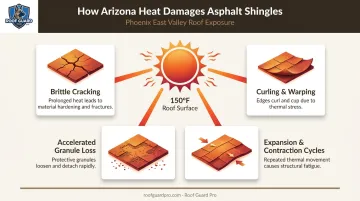
Dark asphalt shingle roofs can reach 150°F on a sunny summer day, according to GAF's research on roof surface temperatures. That kind of heat, paired with intense UV rays, degrades protective granules and dries out the asphalt beneath them.
The result:
- Brittle, cracking shingles that lose flexibility
- Curling and warping at the edges
- Faster granule loss than in milder climates
- Rapid expansion and contraction from daily heat swings, which weakens roof integrity over time
Unmaintained roofs in Arizona often need replacement years earlier than well-maintained ones. Every ignored leak repair compounds that cost over time, turning a $150 fix into a five-figure problem.
Insurance, Warranties, and Cost Savings
Here's something many homeowners don't realize until it's too late: insurance companies generally won't cover damage tied to lack of maintenance.
Two major insurers spell this out clearly:
- Allstate notes that if roof age or an unresolved maintenance issue causes a leak, the resulting damage likely won't be covered.
- State Farm warns that a roof deteriorating over years before it leaks would most likely not have that repair paid out.
Manufacturer warranties carry their own limitations too. Many exclude damage from contamination, algae, or organic material buildup on the roof, which is exactly what neglecting cleaning and inspections invites.
The financial logic is simple. A standard professional roof inspection runs roughly $125 to $358. Compare that to the cost of an emergency repair call, which can tack on an extra $100 to $300 or more on top of the repair itself. Staying ahead of small problems costs a fraction of catching them late.
Types of Preventive Roof Maintenance
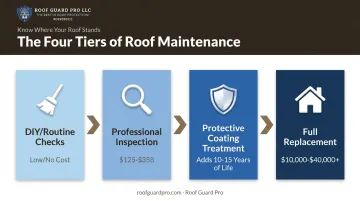
Preventive maintenance isn't a single task. It spans everything from a five-minute visual check to a full roof replacement, and the right approach depends on your roof's age and condition.
Routine and DIY Preventive Tasks
For newer roofs without structural concerns, homeowners can handle basic upkeep themselves:
- Clear debris (leaves, branches) that traps moisture against shingles
- Clean gutters so water drains properly instead of backing up under the roofline
- Conduct ground-level or ladder-based visual inspections, checking for missing or curling shingles
CertainTeed recommends inspecting from the ground with binoculars, or carefully from a ladder, especially before and after storms. This works well as cosmetic upkeep between professional visits, but it's not a substitute for a trained eye on an older or storm-affected roof.
Professional Inspections and Corrective Repairs
Certain signs call for a professional, not a homeowner on a ladder:
- Missing or curling shingles
- Damaged or rusted flashing
- Attic moisture or musty smells
- Visible storm damage after a monsoon event
Ignoring these signs risks hidden leaks, mold growth, and decking rot that worsens quietly until it's a major structural problem. Nationally, asphalt shingle repairs average $1,153, with a typical range of $364 to $1,943, though simple fixes can start around $150. Flashing repairs generally run $200 to $500.
Protective Coating Treatments: Extending Roof Life Mid-Cycle
Between basic upkeep and full replacement sits a middle option many homeowners don't know exists: nanotechnology-based shingle treatments that restore lost oils and rebuild UV protection before shingles deteriorate past the point of saving.
This is where GoNano Shingle Saver comes in. Applied by certified Arizona applicators like Roof Guard Pro, the treatment:
- Replaces natural oils lost from aging shingles due to sun and heat exposure
- Shields shingles permanently from further UV damage
- Adds an estimated 10 to 15 years of usable roof life
- Comes backed by a 10-year GoNano manufacturer warranty
It's best suited for structurally sound roofs in the 12 to 20+ year age range that haven't yet curled, lifted, or lost significant granule structure. For a roof in that window, the treatment costs a fraction of a full re-roof, making it a smart mid-life intervention rather than a last resort.
Major Overhaul or Full Replacement
Some roofs are past saving. Full replacement becomes the only real option when:
- Structural damage has compromised the decking
- Rot has spread across a significant portion of the roof
- Shingles have exceeded their manufacturer-rated lifespan and already curled or lifted
A full Arizona re-roof runs $10,000 to $40,000+, depending on square footage and materials, compared to far lower-cost protective treatments or targeted repairs. The honest answer to "repair, restore, or replace?" usually requires a trained eye. Roof Guard Pro offers a free onsite estimate to determine which category a roof actually falls into before homeowners commit to a costly tear-off.
Warning Signs Your Roof Needs Attention
Visible Wear and Physical Changes
Arizona sun accelerates certain warning signs faster than in milder states:
- Granule loss collecting in gutters
- Curling or cracked shingles
- Dark streaking from algae growth
- Cracked, lifted, or rusted flashing and sealant around chimneys, vents, and skylights
Interior and Performance Indicators
Some of the most important warning signs never show up on the roof's surface:
- Water stains or daylight visible through the attic
- Musty odors suggesting hidden moisture
- Rising energy bills, which can point to compromised attic insulation or ventilation
Recurring Issues or Downtime
Patching the same leak twice usually points to a bigger issue, not bad luck.
- Repeated minor leaks or temporary patches that keep failing
- Accelerated granule loss or brittleness following a monsoon storm
- Frequent contractor visits to the same spot without a lasting fix
Either scenario means it's time for a professional evaluation, and possibly a protective treatment, before replacement becomes the only option left on the table.
Preventive Roof Maintenance Schedule for Arizona Homes
Arizona's maintenance calendar runs on heat, UV, and monsoon timing rather than snow and ice. The National Weather Service marks the official monsoon season as June 15 through September 30, which gives homeowners a clear window to plan around.
| Timing | Task |
|---|---|
| Monthly/seasonal | Ground-level visual inspection, gutter and debris clearing |
| Pre-monsoon (spring, before June) | Check flashing, sealant, and drainage ahead of storm season |
| Post-monsoon (fall) | Inspect for storm damage, clear debris from valleys and drains |
| Every 1–2 years | Professional inspection per manufacturer guidance |
| Around the 10–15 year mark | Consider a protective coating treatment, such as GoNano Shingle Saver, to extend roof life |
CertainTeed recommends professional inspection at least annually, ideally twice a year, which lines up well with a pre- and post-monsoon rhythm.
Sun exposure adds another variable to that rhythm: west- and south-facing roof sections take the brunt of Arizona's UV load. Homes with heavier southern or western exposure may benefit from more frequent checks than the general schedule above suggests.
Conclusion
In Arizona's climate, preventive roof maintenance isn't optional. It's the difference between years of reliable protection and an unexpected five-figure repair bill. The right approach blends DIY vigilance, professional inspections, and protective treatments matched to your roof's actual age and condition, not just its calendar age.
If you're unsure which category your roof falls into, Roof Guard Pro offers free onsite estimates across the Phoenix East Valley, including Mesa, Chandler, Gilbert, Scottsdale, and Tempe.
Their team will assess whether your roof needs routine maintenance or is a strong candidate for GoNano Shingle Saver. This treatment can extend your roof's life by 10 to 15 years, helping you avoid a costly full replacement.
Frequently Asked Questions
What is preventative roof maintenance?
It's the practice of scheduling regular inspections, cleaning, and minor repairs to catch small issues, like loose flashing or debris buildup, before they turn into costly structural problems.
What is the least maintenance roof?
Metal roofs generally require the least upkeep compared to asphalt shingles. That said, every roofing material, including metal and tile, still benefits from periodic checks.
How often should I schedule preventive roof maintenance in Arizona?
Aim for at least twice-yearly inspections, once before monsoon season and once after. Roofs with heavy south or west sun exposure may need checks more often.
Can I do roof maintenance myself, or should I hire a professional?
Ground-level visual checks, like scanning for missing or curling shingles, are safe DIY tasks. Walking a steep roof, diagnosing hidden moisture, or evaluating protective coatings should go to a licensed professional.
How much does preventive roof maintenance typically cost?
A standard professional inspection runs roughly $125 to $358 a year. That's far cheaper than emergency repairs, which can add $100 to $300 or more in rush fees on top of the repair cost itself.
Do roof coatings or treatments count as preventive maintenance?
Yes. Certified treatments like GoNano Shingle Saver are a legitimate mid-life maintenance step, restoring lost shingle oils and UV resistance to extend a structurally sound roof's usable life by years.