Introduction
Arizona's sun doesn't just make summer unbearable. It ages your roof faster than almost any storm, leak, or hailstorm ever could.
Most homeowners notice the fading first. Maybe some granules collecting in the gutter after a windy day.
What they don't realize is that these small signs point to deeper UV-driven deterioration happening inside the shingle itself, long before a leak shows up.
By the time damage is visible from the ground, replacement often feels like the only option, and in Arizona, a full re-roof can run $10,000 to $40,000 or more.
This guide breaks down what actually causes sun and UV roof damage, the warning signs worth watching for, and the prevention strategies that work, including a cost-effective alternative to tearing off your whole roof.
Key Takeaways
- Arizona's summer UV Index regularly hits 10 (Very High), far above New York or Portland
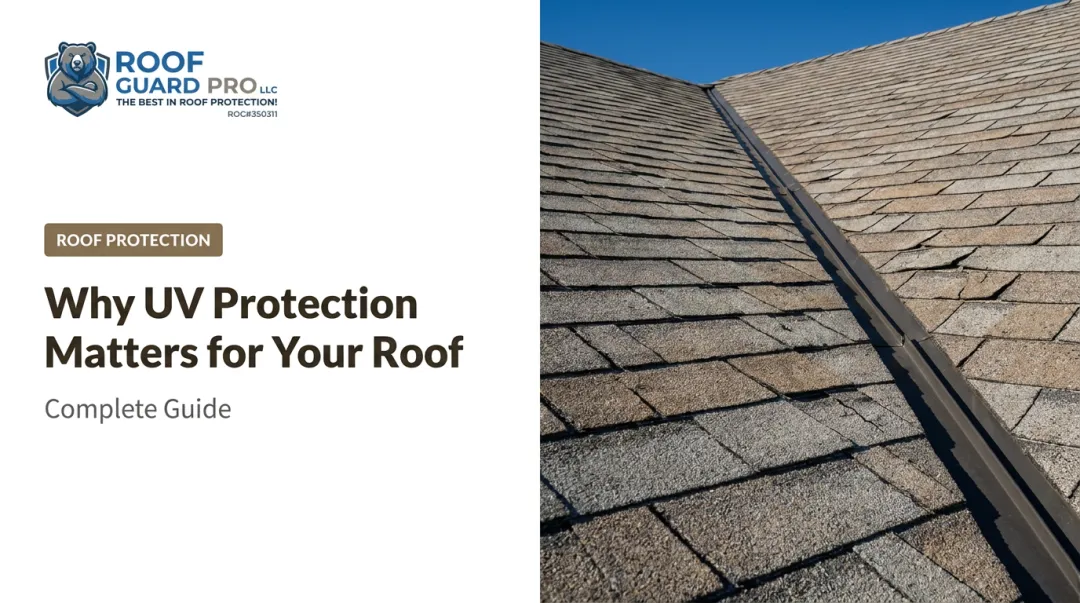
- Curling shingles, granule buildup, and fading signal UV damage, not just cosmetic wear
- Reflective materials, better ventilation, and protective coatings all help slow UV damage
- Structurally sound roofs 12-20+ years old can often be treated, saving thousands over replacement
Common Causes of Sun & UV Roof Damage
"Sun and UV roof damage" goes deeper than a sunburned surface: it's the gradual breakdown of the oils, binders, and granules that hold an asphalt shingle together. Once that structure weakens, everything else follows: cracking, curling, leaks.
Arizona makes this process happen faster than almost anywhere else in the country. According to the EPA's UV Index guide, Phoenix summers regularly reach a UV Index of 10, categorized as Very High, compared to 6-7 in New York and 5-6 in Portland. That's a lot more radiation hitting your shingles, day after day, for months at a time.
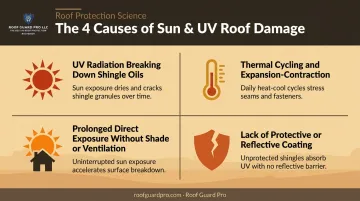
Cause 1: UV Radiation Breaking Down Shingle Oils
Asphalt shingles rely on natural oils to stay flexible. Over years of sun exposure, oxidation and UV exposure degrade the asphalt binder, and the shingle gradually loses that flexibility.
You'll typically see this in roofs 10-15+ years old that sit in full sun all day. Granule loss shows up first, followed by curling edges as the material stiffens and loses its grip.
Cause 2: Thermal Cycling and Expansion-Contraction
Desert roofs don't just bake; they swing between temperature extremes daily. That constant heat-up and cool-down cycle forces shingles to expand and contract over and over, creating micro-cracks over time.
This is why south- and west-facing slopes almost always show more cracking than shaded north-facing sections of the same roof. Same shingles, same age, very different wear pattern.
Cause 3: Prolonged Direct Exposure Without Shade or Ventilation
A roof with no tree cover, no overhangs, and poor attic airflow traps heat right where it does the most damage. Single-story homes with minimal landscaping and weak attic ventilation tend to run hotter attics, which accelerates shingle aging from underneath as well as above.
In newer Gilbert and Chandler subdivisions, where lot sizes leave little room for mature shade trees, this heat-trap effect can show up on roofs installed within just the last five years.
Cause 4: Lack of Protective or Reflective Coating
Untreated shingles absorb solar energy instead of reflecting it. That absorbed heat speeds up oil loss and pushes more heat into the living space below.
Roofs installed without any UV-protective treatment often show visible fading and heat damage well before their rated lifespan runs out, especially in a climate like this one.
What Happens If Sun & UV Damage Is Ignored
Left unchecked, UV damage doesn't stay cosmetic since cracked and brittle shingles eventually let water through during monsoon season. Heat transfer through a degraded roof drives up cooling bills all summer long, and eventually the roof fails structurally, forcing a full replacement.
That replacement isn't cheap. Full asphalt shingle re-roofs in the Phoenix area typically run $6,273 to $11,694, according to Angi's 2026 Phoenix cost data, with larger or premium installations climbing well past $40,000. Catching UV damage early is almost always the cheaper path.
Warning Signs You're About to Experience Roof Sun Damage
Watch for these indicators before things get expensive:
- Curling, cracking, or blistering shingle edges
- Excessive granule buildup in gutters or downspouts
- Faded, chalky, or inconsistent shingle color
- Rising attic temperatures or unexplained jumps in cooling costs
If you're seeing two or more of these, it's time for a professional look, not necessarily a new roof. Roof Guard Pro provides free onsite estimates to see if treatment can extend your roof's life instead of replacing it.
How to Prevent Sun & UV Roof Damage
Effective prevention combines several strategies: the right materials, adequate airflow, shade where possible, and protective treatments that offset what the sun is doing to your shingles.
Choose UV-Resistant or Reflective Roofing Materials
During new construction or a full re-roof, opt for cool-roof-rated or reflective shingles. Standard asphalt shingles measure around 0.10 solar reflectance, while cool-rated shingles can reach 0.25, according to DOE-hosted research from Lawrence Berkeley National Laboratory. That difference means less heat absorbed, less oil loss, and a cooler attic overall.
Apply a Protective Nanotechnology Coating
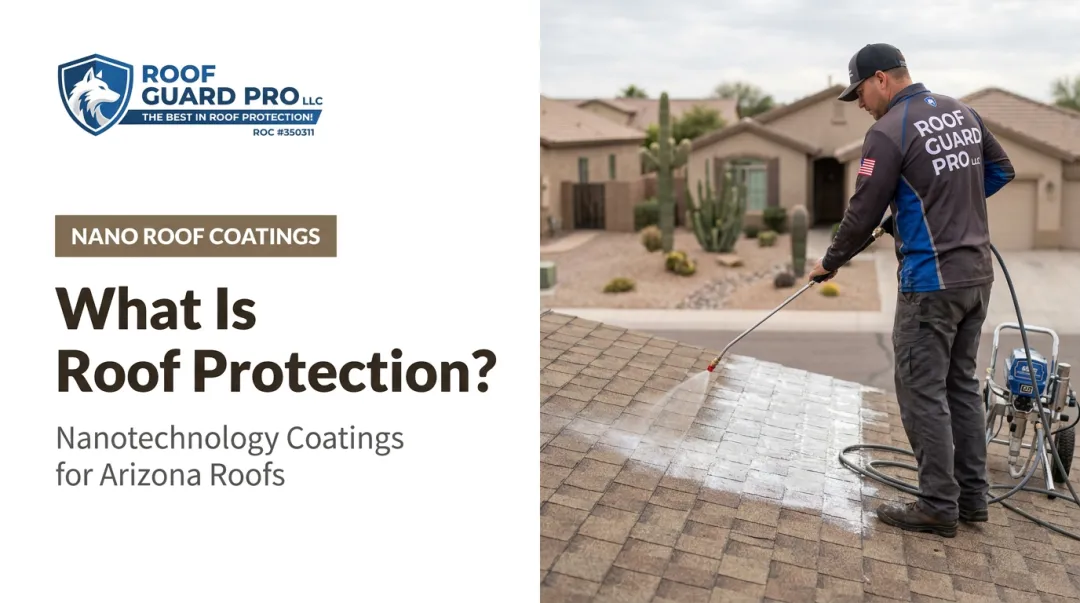
For roofs that are aging but still structurally sound, a certified applicator can apply a treatment like GoNano Shingle Saver. Unlike surface coatings, this nanoparticle technology penetrates the asphalt pores directly, replacing oils the shingle has already lost from years of sun exposure.
This is where Roof Guard Pro focuses its work across Mesa, Chandler, Gilbert, Scottsdale, and Tempe. The company's free onsite assessment determines whether a roof qualifies:
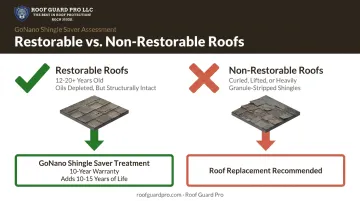
- Restorable roofs (typically 12-20+ years old, oils depleted but structurally intact) are strong candidates
- Non-restorable roofs (curled, lifted, or heavily granule-stripped shingles) get an honest recommendation toward replacement instead
Roofs that qualify get a single application backed by a 10-year GoNano manufacturer warranty, adding an estimated 10-15 years of usable life at a fraction of a full re-roof.
Improve Ventilation and Add Shade Protection
Ridge vents, soffit vents, or powered attic fans release trapped heat before it accelerates thermal cycling. Research from the Building Science Corporation found that well-ventilated roof sheathing runs up to 10°F cooler than unvented sheathing, which measurably slows shingle aging over time.
Radiant barrier foil in the attic, or shade from overhangs and trees, adds another layer of defense by blocking heat before it reaches your shingles. Pacific Northwest National Laboratory reports that a single foil layer can cut radiant heat gain by at least 90%, while a complete radiant barrier system reduces attic-to-house heat flow by roughly 40%.
Tackle ventilation anytime, ideally before peak summer heat, and add shade or radiant barriers during attic renovations or landscaping projects.
Tips for Long-Term Roof Protection and Control
A few habits go a long way toward stretching your roof's life:
- Schedule annual inspections, ideally before and after peak summer, to catch curling or granule loss while it's still manageable
- Keep records of roof age, treatment dates, and warranty terms so you don't miss a maintenance window
- Use only certified applicators for coatings or treatments, since DIY sealants can void manufacturer warranties and cause more harm than good
Roof Guard Pro's technicians are certified GoNano applicators, licensed under Arizona ROC# 350311, so any coating work comes with the manufacturer warranty intact.
Conclusion
Sun and UV damage doesn't happen overnight, but it's not mysterious either. It has identifiable causes, visible warning signs, and straightforward fixes, as long as you catch it early enough.
Waiting until shingles curl or leak turns a preventable issue into a $10,000-plus replacement bill. If you're a Phoenix East Valley homeowner wondering whether your roof still has life left in it, get a free onsite estimate from Roof Guard Pro. There's a good chance your roof qualifies for GoNano Shingle Saver instead of a full tear-off.
Frequently Asked Questions
How do I protect a roof from direct sunlight?
Combine reflective roofing materials, a protective coating like GoNano Shingle Saver, proper attic ventilation, and shade structures where feasible. Together, these reduce both UV exposure and heat buildup on the roof surface.
What is the best roof coating to reduce heat?
Reflective and silicone coatings lower heat absorption, but nanotechnology treatments like GoNano Shingle Saver go further by restoring lost shingle oils, not just adding a reflective layer on top.
How long does UV damage take to affect a roof?
Visible wear (curling, fading, granule loss) often starts appearing within 10-15 years for untreated asphalt shingles in Arizona's climate. Roof orientation and ventilation quality affect the exact timeline.
Can a sun-damaged roof be repaired without a full replacement?
Yes, if the shingles still have structural integrity. Protective coatings can extend a qualifying roof's life by 10-15 years, avoiding full replacement altogether.
Does roof color affect UV and heat damage?
Yes. Lighter, higher-reflectance shingles absorb less solar energy and run cooler than darker ones, which reduces thermal stress on the material over time.
How often should I inspect my roof for sun damage in Arizona?
At least once a year, ideally before summer hits. Arizona's UV intensity and long exposure season make early detection especially important here.