This guide covers what to watch for, what to do about it, and how to build a maintenance routine that protects one of your home's largest investments.
Key Takeaways
- Professional inspections twice a year catch problems before they compound into expensive repairs
- Clogged gutters, overhanging branches, and poor attic ventilation are leading causes of premature shingle failure
- Granule loss and shingle brittleness signal oil depletion, sometimes before any visible cracking shows up
- Even a single missing shingle creates a water entry point that spreads fast
- Shingle rejuvenation treatments restore lost oils and can add 10–15 years to a structurally sound roof
Why Roof Maintenance Matters More Than You Think
The "30-year shingle" label is a materials rating under ideal conditions — not a guarantee. According to the National Roofing Contractors Association (NRCA), most new roofs are designed to provide useful service for about 20 years, with actual longevity depending heavily on climate, installation quality, and ongoing maintenance. GAF rates residential asphalt shingles similarly, at 20 to 30 years.
How well a roof holds up over that span comes down to one thing: how well it's maintained. That difference shows up clearly in repair and replacement costs.
The Cost Gap Between Preventive and Reactive Care
The financial difference between catching problems early and ignoring them is significant:
- Routine roof repairs: $394 to $1,963 on average, with a national mean around $1,171
- Roof leak repair: $360 to $1,550, plus underlayment replacement at $2–$4/sq ft
- Water damage restoration: averages $3,864, with many homeowners spending up to $6,378
- Mold remediation: $1,200 to $4,000 on top of the repair itself
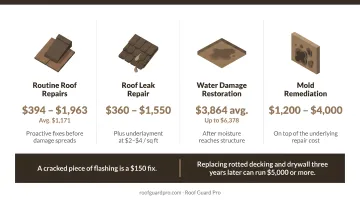
A cracked piece of flashing is a $150 fix. Replacing the rotted decking and drywall it soaks through three years later can run $5,000 or more.
What's at Stake Beyond Repair Bills
- Structural damage: Prolonged moisture exposure rots roof decking and can compromise the framing below
- Indoor air quality: Water infiltration creates conditions for mold growth — a serious health risk that spreads beyond the attic
- Insurance coverage: Standard homeowners policies exclude wear and tear. The Insurance Information Institute notes that homeowners are responsible for routine maintenance — and insurers can deny claims when neglect contributed to the damage
- Resale value: According to the 2025 Cost vs. Value Report, a new asphalt shingle roof recoups about 68% of its cost at resale. A deteriorating roof does the opposite — it reduces appraised value and can stall home sales entirely
Warning Signs Your Roof Needs Maintenance
Most roof problems broadcast warnings well before they become emergencies. The challenge is knowing what to look for.
Visible Shingle Deterioration
Walk around your property and look for these physical signs:
- Curling or buckling edges — shingles pulling away from the deck, often indicating oil loss or moisture cycling underneath
- Bald spots — areas where granules have worn away, exposing the raw asphalt layer beneath
- Cracked or broken shingles — a direct result of brittleness from oil evaporation
- Dark streaks or green patches — algae (Gloeocapsa magma) discoloration, which ARMA identifies as a common cause of brown-to-black staining on roof surfaces
ARMA notes there's no confirmed scientific evidence that algae directly damages shingle material, though it reduces reflectivity and curb appeal. Moss is more serious — it lifts shingle edges, increases wind blow-off risk, and promotes lateral water movement that can reach the roof deck.
Granules are the primary UV shield for asphalt shingles, according to CertainTeed. Once they're gone, UV rays degrade the asphalt directly — accelerating brittleness and cracking.
Signs of Water Intrusion and Structural Stress
Exterior symptoms only tell part of the story. Move your inspection indoors to the attic:
- Water stains on attic decking or ceiling boards
- Daylight visible through roof boards (no insulation is blocking it — actual gaps exist)
- Soft or spongy spots when pressing on the roof deck from inside — this signals rot or prolonged moisture saturation
Flashing is also worth scrutiny. The metal sealing around chimneys, vents, and roof valleys is one of the most frequent leak sources. Watch for rust, separation from the substrate, or missing sections — especially after high winds or hail.
Deterioration Clues From the Ground
After any significant storm, do a quick walk-around:
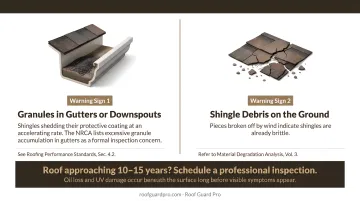
- Granules in gutters or downspout splash areas — a reliable sign that shingles are shedding their protective coating at an accelerating rate. The NRCA lists excessive granule accumulation in gutters as a formal inspection concern.
- Shingle debris on the ground — pieces broken off by wind indicate shingles are already brittle
If your roof is approaching the 10–15 year mark, schedule a professional inspection regardless of visible symptoms. Oil loss and UV damage happen beneath the surface long before any visible symptoms appear.
How to Extend Roof Life: Proven Maintenance Strategies
Most roofs fail early for the same preventable reasons. These strategies target the most common causes — applied consistently, they can add years to your roof's lifespan.
Schedule Professional Inspections
The NRCA and ARMA both recommend inspections twice per year — spring to assess winter damage, and fall before rain and freeze season. After major weather events like hail or high winds, add an unscheduled inspection.
A professional inspection covers what most homeowners can't safely or accurately assess themselves:
- Shingle securement and edge integrity
- Flashing condition at all penetrations
- Attic ventilation adequacy
- Moisture detection in the decking
As a roof ages, increase frequency: roofs under 10 years can be inspected annually, while roofs 15+ years old benefit from twice-yearly professional evaluation.
Keep Gutters, Drains, and Overhangs Clear
Clogged gutters redirect water back under shingle edges and along the fascia — GAF confirms this is a documented cause of shingle and deck damage. Clean gutters at minimum twice per year (spring and fall), and after heavy leaf fall seasons.
Additional steps that matter:
- Ensure downspouts direct water at least 5 feet from the foundation
- Trim tree branches overhanging the roof by at least 10 feet — they deposit debris, shade the roof (encouraging moss), and can physically abrade shingles in wind events
Maintain Proper Attic Ventilation and Insulation
Without adequate ventilation, heat and moisture build up in the attic. The consequences differ by season but are equally damaging:
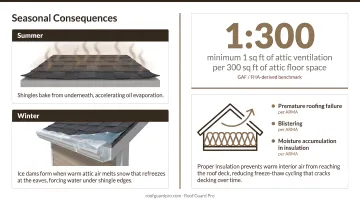
- Summer: Shingles bake from underneath, accelerating oil evaporation
- Winter: Ice dams form when warm attic air melts snow that refreezes at the eaves, forcing water under shingle edges
GAF references the 1:300 rule — a minimum of 1 square foot of attic ventilation per 300 square feet of attic floor space — as an FHA-derived benchmark. ARMA adds that inadequate ventilation causes premature roofing failure, blistering, and moisture accumulation in insulation.
Proper insulation is the other half of this equation. It prevents warm interior air from reaching the roof deck, reducing the freeze-thaw cycling that cracks decking over time.
Address Repairs Promptly
Even a single missing or cracked shingle creates a water entry point. Water spreads laterally under adjacent shingles faster than most homeowners expect — what starts as one damaged shingle becomes saturated decking across a wider area.
The most commonly neglected repair items, all of which are inexpensive to fix early:
- Cracked or dried-out caulking around pipe penetrations and vents
- Separated flashing at chimney bases and roof valleys
- Loose or missing ridge cap shingles
Catching any one of these early typically costs under $200. Left unaddressed, each one creates a path for water damage that can run into thousands.
Advanced Roof Protection: Shingle Rejuvenation Treatments
Asphalt shingles are manufactured with petroleum-based oils (maltenes) that keep the bitumen flexible and waterproof. As research on bitumen aging confirms, oxidation and volatilization reduce maltene concentration over time while asphaltene proportion increases, producing a harder, more brittle material.
This degradation begins well before any visible damage appears, and it accelerates in high-UV climates like the Phoenix metro area.
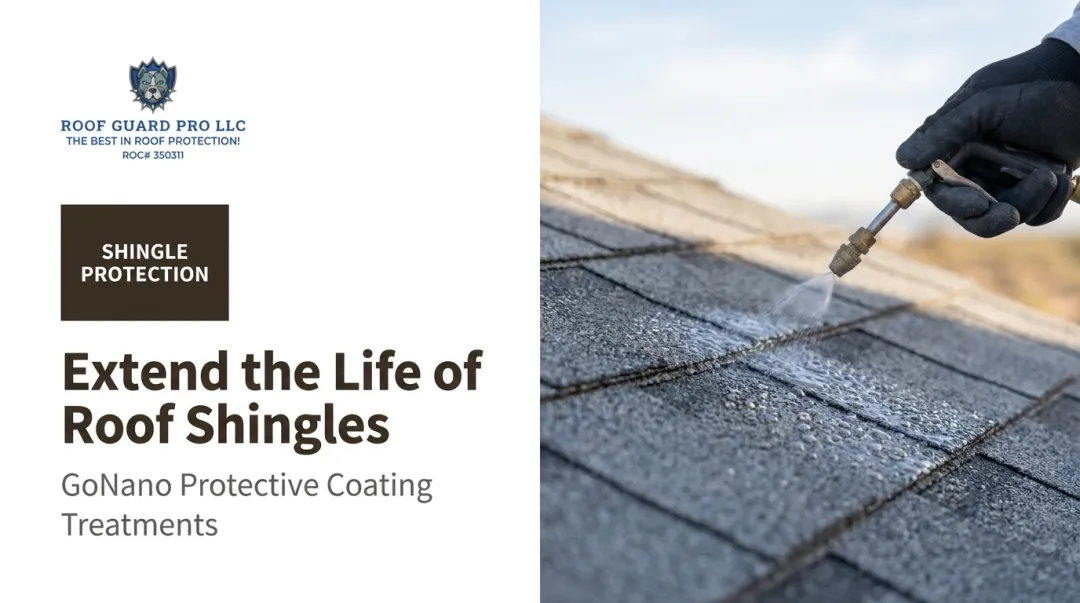
Shingle rejuvenation treatments address this at the chemical level. Rather than coating the surface, products like GoNano Shingle Saver — applied by Roof Guard Pro — use nano-sized particles that penetrate deep into asphalt pores. A single professional application delivers:
- Restored flexibility in brittle, oil-depleted shingles
- UV protection that slows further oxidation
- Hydrophobic properties that block moisture and prevent algae growth
- Reduced granule loss from water infiltration
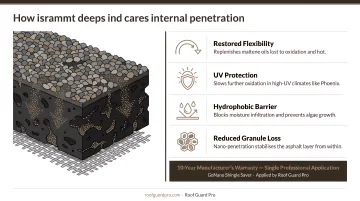
One application is backed by a 10-year manufacturer's warranty.
When Rejuvenation Makes Sense — and When It Doesn't
Rejuvenation works best on roofs that are structurally sound but showing surface aging: granule loss, UV-induced dulling, minor surface cracking, or early brittleness. It's appropriate for both aging roofs (15+ years) as a restorative measure, and newer roofs as proactive maintenance.
It is not a substitute for structural repair. If a roof has:
- Active leaks
- Significant structural damage to the deck
- Multiple missing shingles or failed flashing
...those issues require repair or replacement first. Rejuvenation extends the life of a sound roof; it doesn't rescue one that's already failed structurally.
One important caveat: ARMA advises caution with field-applied coatings on installed shingles, citing limited documentation for life-extension claims and potential risks including granule loosening and shingle curling. Homeowners should ensure any product used is professionally applied and backed by verifiable manufacturer support.
Roof Maintenance Schedule at a Glance
The right frequency depends on roof age, material, and local climate. Treat the intervals below as minimums — adjust earlier if your roof is older or showing surface aging.
| Interval | Task |
|---|---|
| After every major storm | Ground-level visual check for missing shingles, debris, and granule accumulation in gutters |
| Twice yearly (spring & fall) | Gutter cleaning, downspout check, valley debris removal, visual flashing and caulking inspection |
| Annually | Professional inspection (roofs under 15 years); attic ventilation and insulation check; branch trimming |
| Every 5 years | Professional assessment for oil loss and UV damage; consider rejuvenation treatment for roofs 10+ years showing surface aging |
Phoenix-area note: Arizona's UV intensity accelerates shingle oil evaporation faster than most climates. Roof Guard Pro recommends evaluating rejuvenation treatment around the 7–10 year mark, before visible deterioration sets in.
Frequently Asked Questions
How can I extend the life of my roof?
Schedule bi-annual professional inspections, keep gutters clear, and maintain proper attic ventilation. Address any repairs (missing shingles, cracked caulk, separated flashing) immediately rather than monitoring them. For roofs 10+ years old, a shingle rejuvenation treatment can restore lost oils and UV protection, adding years to a structurally sound roof.
Does a 30-year roof really last 30 years?
Rarely without consistent upkeep. The NRCA notes that most new roofs are designed for about 20 years of useful service, with actual longevity dependent on climate, installation quality, and maintenance. The "30-year" rating is a materials designation under ideal conditions — consistent maintenance determines whether you reach that number or fall short.
What is the 25% rule for roofing?
It's a building code guideline used in some jurisdictions stating that if more than 25% of a roof's surface requires repair or replacement within 12 months, the entire roofing system must meet current code standards. It's not universal, and whether it applies to your situation depends on local regulations and a professional inspection.
How often should I have my roof inspected?
Twice per year (spring and fall) is the standard recommendation from both the NRCA and ARMA. Add an inspection after any severe weather event involving hail, high winds, or significant debris. Roofs 15+ years old benefit from more frequent professional evaluation.
Can shingle rejuvenation treatments replace a full roof replacement?
Not on a structurally compromised roof. Active leaks, deck damage, or missing shingles must be addressed before any treatment. For roofs with sound structure showing surface aging (granule loss, brittleness, UV dulling), rejuvenation can extend service life and defer replacement by years.
What is the biggest threat to an asphalt shingle roof's lifespan?
UV exposure and the resulting oil evaporation are the primary chemical threat. As shingles lose their petroleum-based oils, they become brittle and lose their ability to shed water — sometimes before any visible damage appears. Moisture infiltration through depleted or missing granules compounds the problem. Both mechanisms are directly addressed by proper maintenance and protective treatments.