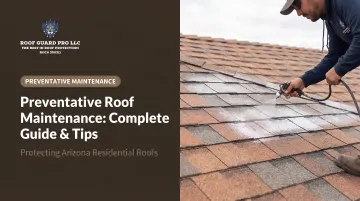
Skipping preventative maintenance doesn't just risk your wallet. It accelerates shingle degradation, invites water intrusion, compromises structural integrity, and can void manufacturer warranties at the worst possible time.
This guide covers what you need to know: why preventative maintenance matters, the three types of maintenance every homeowner should understand, how to spot early warning signs, and a practical seasonal schedule to keep your roof in good shape year-round.
Key Takeaways
- A standard professional inspection costs $125–$358 — a fraction of average repair or replacement costs
- Asphalt shingles degrade as they lose oils and granules; catching this early is the whole game
- Routine upkeep, protective treatments, and corrective repairs all have a place — but prevention costs the least
- Inspect visually after major storms and schedule at least one professional inspection annually
- Granule loss, curling shingles, and attic stains signal overdue maintenance — treat them as urgent, not cosmetic
Why Preventative Roof Maintenance Matters
Shingles Age From the Inside Out
Asphalt shingles are a composite system. The coating asphalt makes up 20–25% of each shingle and is the component most vulnerable to UV exposure and oxidation. As shingles age, this binder loses flexibility, becomes brittle, and starts cracking. Granules — the protective layer on top — gradually detach, accelerating UV damage to the asphalt beneath.
This process is invisible at first. By the time you see curling edges or bare spots, degradation has already been underway for years. That's precisely why prevention must start before visible damage appears.
The Financial Case Is Simple
Compare these verified 2026 cost benchmarks:
| Maintenance Stage | Typical Cost |
|---|---|
| Professional inspection | $125–$358 |
| Roof repair (typical range) | $394–$1,963 |
| Roof repair (serious structural issues) | Up to $7,000+ |
| Full roof replacement (average) | $9,602 |
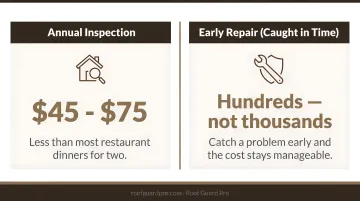
A single annual inspection costs less than most restaurant dinners for two. Catch a problem early and you're looking at hundreds — not thousands.
Energy Efficiency and Warranty Protection
Intact shingles do more than keep rain out. Conventional roofs can reach 150°F or more on a sunny summer afternoon, and a damaged or deteriorating roof surface transfers that heat directly into your attic — increasing HVAC load and utility costs. Maintained shingles help your attic insulation perform as intended.
On the warranty side, major manufacturers like CertainTeed explicitly exclude coverage for neglect in their warranty documents. If you ever need to file a claim, documented neglect gives the manufacturer grounds to deny it — so keeping maintenance records matters.
Safety Is the Non-Negotiable
A neglected roof leaks, then rots. Water that gets under damaged shingles works into the decking, then the rafters, then potentially the ceiling structure below. What starts as a shingle problem can become a mold problem, a structural problem, and a safety problem.
Types of Roof Maintenance Every Homeowner Should Know
Not all roof maintenance looks the same. Some tasks are DIY-friendly and recurring. Others require professional involvement. And some represent a last resort when prevention has been skipped too long.
Routine Preventive Maintenance
These are the recurring tasks that form the foundation of a healthy roof:
- Clear debris from the roof surface and gutters after storms and each fall
- Inspect flashing around chimneys, vents, and skylights for rust, gaps, or separation
- Trim overhanging branches that can scrape shingles or deposit debris
- Check gutters for granule accumulation — a key early indicator of shingle wear
- Visual scan after storms from the ground, looking for displaced shingles or obvious damage
Routine maintenance is sufficient when you're dealing with minor granule buildup, small amounts of debris, or early-stage moss. When shingles are cracked, missing, or curling significantly, escalate to a professional.
Protective and Rejuvenating Treatments
Beyond cleaning and repairs, a category of treatments exists specifically to restore what shingles lose over time.
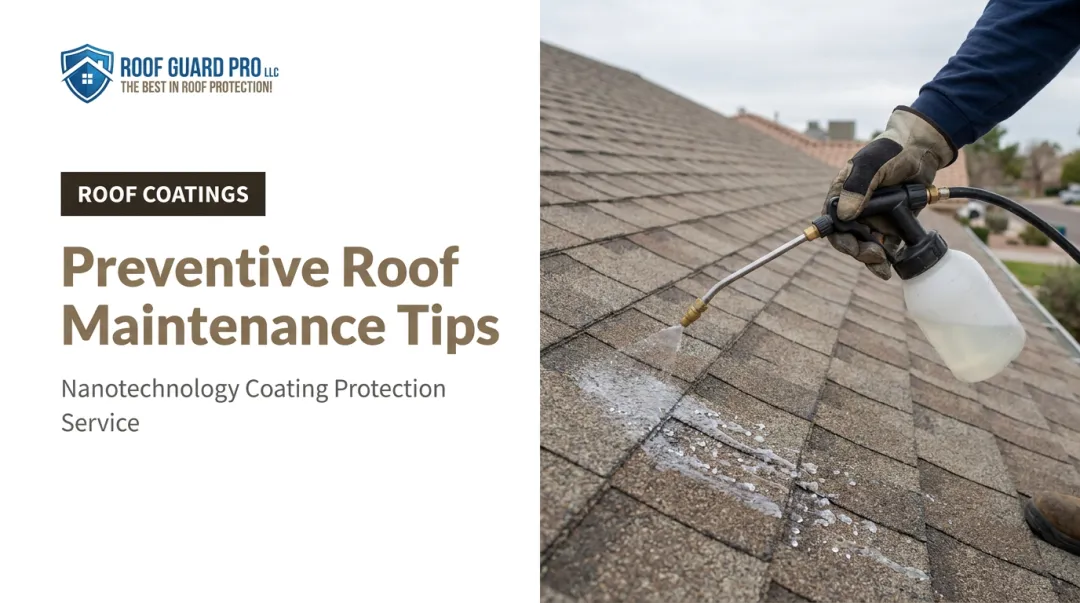
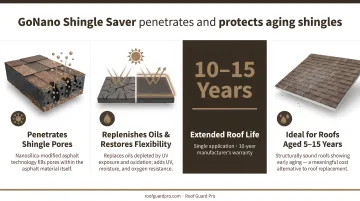
GoNano Shingle Saver, applied by Roof Guard Pro (ROC# 350311), uses a nanosilica-modified asphalt technology to penetrate shingle pores rather than simply coat the surface, replenishing the oils that UV exposure and oxidation deplete. The nanoparticles are small enough to fill pores within the asphalt material itself, restoring flexibility and adding a protective barrier against UV rays, moisture, and granule loss.
The treatment also imparts hydrophobic behavior, increased heat resistance, and improved oxygen resistance to preserve shingle color.
A single application carries a 10-year manufacturer's warranty and extends roof life by 10–15 years. This type of treatment is particularly well-suited for roofs aged 5–15 years that are structurally sound but showing early signs of aging — and it's a meaningful cost alternative to replacement.
Corrective (Reactive) Maintenance
Corrective maintenance covers repairs made after damage has occurred: patching leaks, replacing missing shingles, resealing flashing. Sometimes it's unavoidable — but relying on it exclusively is both more expensive and less reliable than prevention.
One deferred repair compounds quickly. A missing shingle lets water reach the decking below. Wet decking develops rot. Rot spreads to adjacent structure. What was a single shingle replacement becomes a partial deck repair. Early intervention, every time, costs less.
Warning Signs Your Roof Needs Maintenance
Knowing what to look for lets you catch problems between professional inspections. Check from three vantage points: the ground outside, the attic inside, and the gutters.
Shingle Condition and Granule Loss
Granule loss is one of the first measurable signs of shingle aging. Look for:
- Bare or thin patches on shingles where granules have worn away
- Granule accumulation in gutters or downspout splash zones
- A general duller, more matte appearance on shingles that were once uniformly textured
Granules protect the asphalt layer from UV degradation. Once they're gone in meaningful amounts, shingle breakdown accelerates quickly. CertainTeed confirms that shed granules in gutters and downspouts reduce UV protection and shingle lifespan.
Other shingle warning signs to watch for:
- Cupping — edges turning upward, often from moisture imbalance or aging
- Clawing — tab distortion indicating different stress patterns in the shingle layers
- Cracking or splitting — indicates advanced brittleness
- Missing shingles — requires prompt attention
- Dark streaking — typically algae, which GAF notes affects appearance; moss is more concerning as it can lift and loosen shingles
Flashing, Sealant, and Structural Changes
Flashing around chimneys, skylights, vents, and roof-wall intersections is among the most common sources of leaks. When inspecting from the ground with binoculars, look for:
- Rust streaks or visible corrosion on metal flashing
- Gaps where flashing has pulled away from the surrounding surface
- Missing sealant or cracked caulk at seams
Also scan the roofline itself. A sagging or uneven ridgeline viewed from the ground can indicate water-damaged decking or compromised rafters, both of which warrant an immediate professional assessment.
Interior Warning Signs
The attic is often where water infiltration shows up first. Check periodically for:
- Water stains or dark spots on roof decking
- Any visible daylight through the deck
- Mold or mildew smell
- Wet or compressed insulation
If ceiling stains or bubbling paint appear inside the living space, the leak has typically been active for some time. Interior damage signals the problem is further along than it looks — address it as a structural issue, not a cosmetic one.
Post-Storm and Seasonal Checks
After significant wind, hail, or heavy rain, do a ground-level walkthrough. Storm-specific damage looks like:
- Impact marks or soft spots on shingles (hail)
- Displaced or lifted shingles along ridges and edges
- Debris accumulation in roof valleys and gutters
UV exposure in summer and freeze-thaw cycles in winter drive different types of shingle degradation, making fall and spring the two highest-priority times for a thorough check. Catching these issues early — before they become leaks or structural damage — is where preventative maintenance pays off most.
Seasonal Roof Maintenance Schedule
Maintenance frequency depends on your roof's age, your local climate, and surrounding environment. A roof in the Phoenix metro faces intense UV load year-round. A roof in a northern climate deals with ice dams and freeze-thaw cycling. Both need attention — just different kinds.
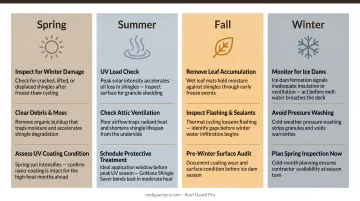
The tasks that matter most shift with each season. Here's what to prioritize throughout the year:
| Season | Key Tasks | DIY or Professional? |
|---|---|---|
| Spring | Post-winter inspection, gutter clearing, check for freeze-thaw shingle damage, inspect flashing | DIY visual + pro inspection recommended |
| Summer | UV and heat-related shingle check, debris removal, moss/algae treatment if needed | DIY; pro for treatments |
| Fall | Pre-winter gutter cleaning, sealant integrity check, trim overhanging branches | DIY |
| Winter | Monitor for ice dams, visual checks after storms, avoid walking on roof | DIY visual only |
When to Call a Professional
The NRCA recommends roof inspections at least twice per year, preferably spring and fall, with additional checks after major storms.
As a general rule:
- DIY-appropriate: Ground-level visual inspections, gutter cleaning, debris removal, checking attic for stains
- Call a pro: Anything involving getting on the roof, repairing or resealing flashing, assessing structural concerns, or evaluating significant shingle damage
Licensed contractors bring both safety and diagnostic accuracy that ground-level checks can't match. In high-UV climates like Phoenix, professional assessments also help identify when shingles are losing oils and UV resistance — the kind of early-stage degradation a protective treatment can address before it becomes a replacement.
Conclusion
Your roof is one of the most expensive components of your home, and consistent maintenance is what keeps that investment intact. Small, consistent actions prevent large, costly repairs. A $250 inspection now versus a $9,600 replacement later is not a close comparison.
Start with a seasonal checklist and schedule your annual professional inspection. From there, consider what proactive treatments make sense for your roof's age and condition.
Roof Guard Pro applies nano-coating treatments to residential shingled roofs across the Phoenix metro area. A single application can add 10 to 15 years to your roof's life, helping homeowners avoid the cost of early replacement entirely.
Frequently Asked Questions
What maintenance should be done on a roof?
Core recurring tasks include clearing debris from the roof and gutters, inspecting shingles and flashing for damage, checking the attic for water stains, and trimming overhanging branches. Schedule at least one professional inspection annually.
What is the 25% rule for roofing?
The 25% rule holds that if more than 25% of a roof's surface is damaged or deteriorated, full replacement is typically more cost-effective than patching. Regular maintenance is the most direct way to stay well below that threshold.
How often should a residential roof be inspected?
At minimum, once per year — but twice yearly (spring and fall) is the strongest industry recommendation, per NRCA and ARMA. Add a visual check from the ground after any significant storm event regardless of your regular schedule.
How do I know if my shingles need to be replaced or just maintained?
Shingles with granule loss, minor curling, or early UV degradation can often be maintained and treated. Cracked, missing, or structurally compromised shingles typically point toward replacement.
Can I do roof maintenance myself or do I need a professional?
Ground-level inspections, gutter cleaning, and debris removal are reasonable DIY tasks. Anything requiring roof access, flashing repair, or structural assessment should be handled by a licensed contractor — both for safety and for accurate diagnosis.
How much does preventative roof maintenance cost?
A professional inspection runs $125–$358 on average. Compare that to typical roof repairs at $394–$1,963, or a full replacement averaging $9,602. Annual preventative maintenance is consistently the lowest-cost path over a roof's lifetime.