What makes this especially frustrating is that many Arizona homeowners believe they're already covered. They have homeowners insurance. They have a manufacturer warranty. They assume that's enough.
It isn't.
Insurance only responds after something goes wrong. Warranties have expiration dates, proration schedules, and fine-print exclusions. Neither one addresses what actually destroys roofs here: the slow, relentless assault of Arizona's sun and heat.
This guide breaks down the three distinct layers of roof protection — insurance, warranties, and proactive treatment — explaining what each covers, where each falls short, and how to combine them into a plan that keeps your roof protected long-term.
Key Takeaways
- Homeowners insurance covers sudden damage, not gradual UV or heat deterioration
- Manufacturer warranties deliver full coverage for roughly the first 10 years, then protection drops off sharply
- Arizona's summer UV Index regularly hits 10, with 55+ days above 110°F annually
- Proactive nano-coating treatment covers what insurance and warranties both leave exposed
- A complete protection plan combines insurance, a manufacturer warranty, and applied treatment — each covering what the others don't
Why Arizona Is Especially Hard on Roofs
Arizona's climate doesn't just shorten roof life — it attacks from multiple directions simultaneously.
The EPA documents Phoenix's typical summer UV Index at 10, which is classified as "very high." Meanwhile, the National Weather Service reported that Phoenix recorded 133 days at or above 100°F and 55 days at or above 110°F in 2023 — including July 2023, the hottest month in Phoenix's recorded history, with an average temperature above 100°F for the entire month.
How UV and Heat Destroy Asphalt Shingles
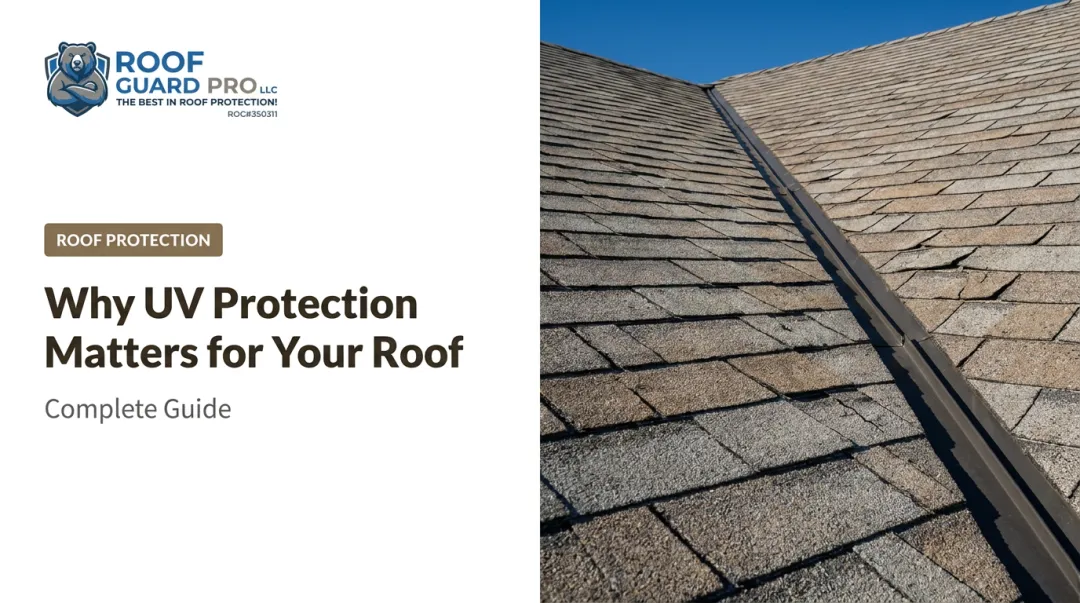
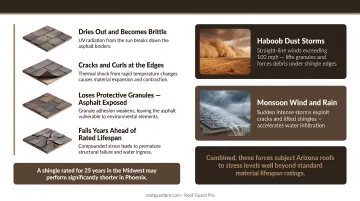
Asphalt shingles rely on oils and binding agents to stay flexible and intact. UV radiation depletes those oils over time, causing shingles to:
- Dry out and become brittle
- Crack and curl at the edges
- Lose protective granules, exposing the asphalt beneath
- Fail years ahead of their stated material lifespan
The granule coating exists specifically to provide UV protection. Once granules are gone, deterioration accelerates — and there's no reversing it without intervention.
UV and heat aren't the only threats. Arizona's seasonal weather adds two more stressors that national roofing standards rarely factor in:
- Haboob dust storms — capable of producing straight-line winds exceeding 100 mph, lifting granules and forcing debris under shingle edges
- Monsoon wind and rain — sudden, intense storms that exploit any existing cracks or lifted shingles, accelerating water infiltration
Combined, these forces subject Arizona roofs to stress levels well beyond what standard material lifespan ratings account for. A shingle rated for 25 years in the Midwest may perform significantly shorter in Phoenix.
The Three Layers of Roof Protection Every Arizona Homeowner Needs
Complete roof protection isn't one thing — it's three distinct but complementary layers:
| Layer | What It Covers | What It Misses |
|---|---|---|
| Homeowners Insurance | Sudden damage from storms, hail, fire | Gradual wear, UV damage, aging |
| Manufacturer & Workmanship Warranties | Material defects, installation errors | Storm damage, maintenance needs |
| Proactive Roof Treatment | UV degradation, heat-related deterioration | Structural damage, active leaks |
Most Arizona homeowners have Layer 1 and Layer 2. Layer 3 — proactive treatment — is the one most commonly skipped, and the only one that actively adds years back to a roof's lifespan.
Layer 1: Homeowners Insurance
Designed to respond after a damage event. It covers sudden, accidental losses from named perils — wind, hail, fire, falling objects. It does not cover shingles that dried out over a decade of Arizona summers.
Layer 2: Roof Warranties
Two warranties come with every new roof: the manufacturer's warranty (covers material defects) and the workmanship warranty (covers installation errors). Both have time limits, proration schedules, and specific exclusions — covered in detail below.
Layer 3: Proactive Treatment
A preventive application that addresses what the other two layers ignore: the daily UV and heat stress that steadily degrades shingles in Arizona's climate. Applied before deterioration becomes advanced, it can restore shingle integrity and add 10–15 years to the roof's functional lifespan.
What Homeowners Insurance Covers for Your Arizona Roof
What's Actually Covered
According to the Arizona Department of Insurance and Financial Institutions, standard homeowners policies generally cover roof damage from:
- Wind and hail
- Falling objects
- Fire
- Rain or snow — but only if wind or hail first creates an opening in the roof or wall
Flood damage is explicitly excluded. Gradual deterioration, UV damage, and age-related wear are not covered events.
RCV vs. ACV: A Critical Distinction
Not all policies pay the same way when you file a claim:
- Replacement Cost Value (RCV): Pays the full cost to repair or replace with similar materials, no depreciation deducted
- Actual Cash Value (ACV): Pays replacement cost minus depreciation based on age and wear — meaning an older roof yields a much smaller payout
On a $9,000 roof replacement, an ACV policy on a 15-year-old roof could leave you covering several thousand dollars out of pocket, so confirming which valuation method your policy uses before a claim is filed matters more than most homeowners realize.
Protecting Your Insurability
Insurers can non-renew a policy if a property condition creates unacceptable risk. Arizona's DIFI notes that when non-renewal is based on a curable condition, insurers must provide 30 days' notice to remedy it — but getting ahead of that scenario is far less stressful than responding to one. Three steps that protect your coverage:
- Schedule annual roof inspections and document findings with dated photographs
- File claims promptly after any storm or damage event — delays can complicate coverage
- Keep maintenance records showing repairs, inspections, and any professional work performed
Roof Warranties in Arizona: Types, What's Covered, and What to Watch For
The Two Warranty Types
Every new roof installation comes with two separate warranties:
- Manufacturer's warranty: Covers defects in the roofing material itself. Asphalt shingles typically carry terms of 25 years, 30 years, or "Lifetime" depending on the product tier.
- Workmanship warranty: Covers installation errors made by the contractor. The NRCA notes many contractors offer one to two years of workmanship coverage, though Arizona contractors vary significantly — some offer 10 years, and some extend further.
The Proration Problem
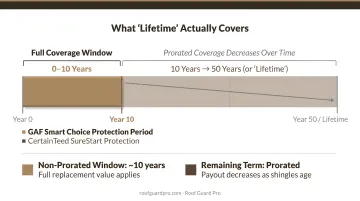
A "Lifetime" or 50-year material warranty sounds comprehensive, but the full coverage window is much shorter.
GAF, for example, provides a 10-year Smart Choice Protection Period for Lifetime shingles — during which full non-prorated coverage applies. After that period, the homeowner's payout decreases as the warranty prorates over the remaining term. CertainTeed's SureStart protection similarly covers early-life replacement costs for approximately 10 years.
What Voids a Roof Warranty
Common warranty voiders in Arizona:
- DIY repairs or modifications
- Adding solar panels or satellite dishes without notifying the manufacturer or contractor
- Poor attic ventilation (which causes extreme roof temperatures)
- Failure to maintain the roof — cracked tiles, clogged gutters, and ignored minor damage can all be cited to deny claims
- Unauthorized contractors performing work on the roof
Transferability and Resale Value
Many manufacturer warranties and some workmanship warranties transfer to a new homeowner — typically once, within 30–60 days of sale. CertainTeed, for example, explicitly limits transfer to the first subsequent owner only. A transferable warranty adds measurable resale value, so confirm transferability before signing any roofing contract.
Five Questions to Ask Before Signing
- How long is the workmanship warranty, and does it prorate?
- Does my shingle product qualify for an extended system warranty?
- Is this warranty transferable to a future buyer?
- What specific events or actions are excluded from coverage?
- What maintenance is required to keep the warranty valid?
Proactive Roof Treatments: The Protection Layer Most Homeowners Skip
The Gap Neither Insurance nor Warranties Fill
Most Arizona homeowners hit a coverage blind spot around year 10: the workmanship warranty has expired, the manufacturer's warranty has been prorating for years, and insurance only responds to sudden damage events. Meanwhile, Phoenix's UV Index 10 sun keeps depleting the oils in the shingles.
None of those protections address that. The damage is slow, invisible, and cumulative — and it's happening every day.
How Professional Roof Treatment Works
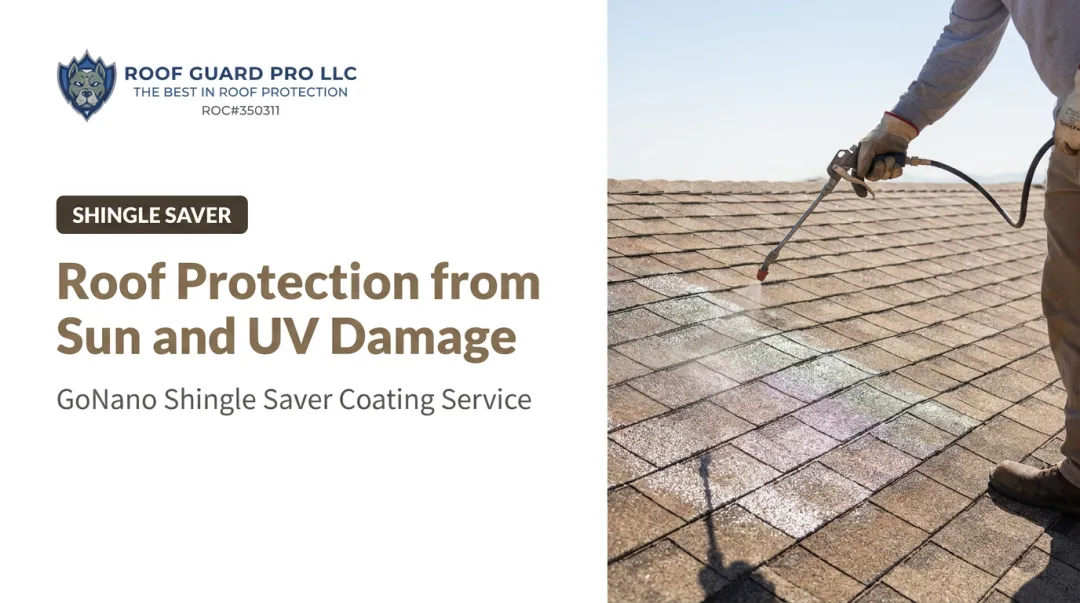
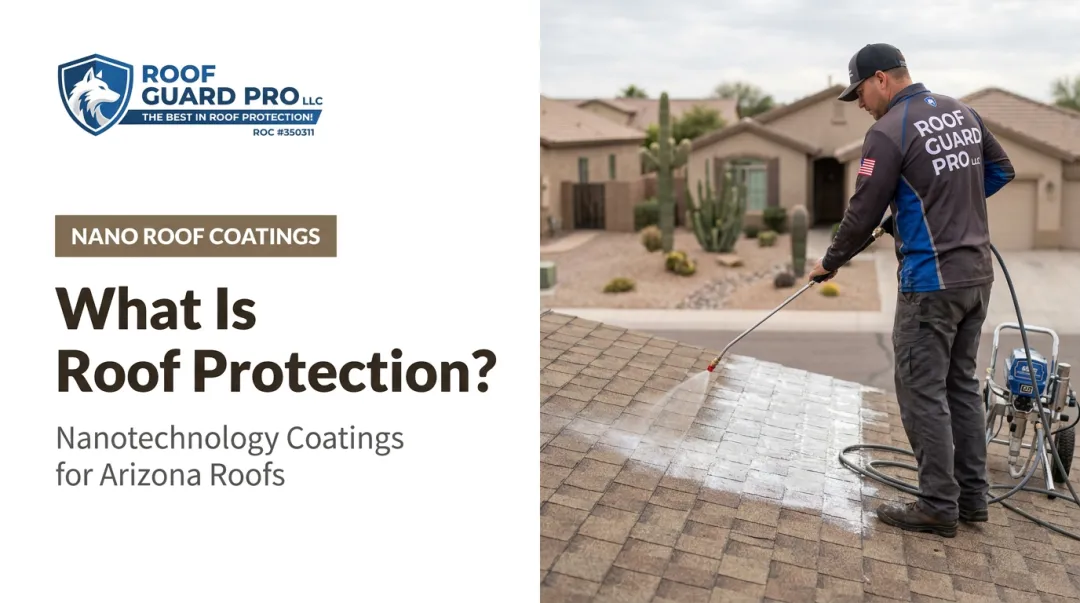
Roof Guard Pro (ROC# 350311) applies GoNano Shingle Saver, a nanotechnology-based treatment that addresses this exact gap. Using nanosilica-modified asphalt technology, the product penetrates deep into the shingle's pores rather than just coating the surface, delivering several protective functions:
- Oil replenishment: Replaces the oils UV exposure depletes, restoring shingle flexibility
- UV barrier: Shields the asphalt from continued UV radiation
- Hydrophobic protection: Repels water and resists algae growth
- Granule retention: Reduces ongoing granule loss
- Impact resistance: Increases flexibility against hail and wind stress
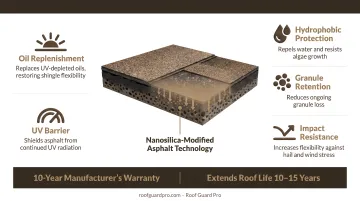
A single application is backed by a 10-year manufacturer's warranty and is positioned to extend roof life by 10–15 years.
The Cost Comparison
Nationally, professional roof coatings average $1,465, with per-square-foot costs ranging from $0.65 to $5 depending on roof type and material. Roof Guard Pro provides free estimates tailored to each property — contact them at (480) 878-2238 or info@roofguardpro.com to get pricing specific to your roof.
Compare that against Phoenix's average roof replacement cost of $8,856. For a structurally sound roof showing early UV fatigue, treatment is a fraction of that figure — and delays or eliminates the replacement entirely.
What Treatment Is Not
GoNano Shingle Saver is a preventive maintenance measure, not a repair service. It does not:
- Fix structural damage, active leaks, or missing shingles
- Replace insurance coverage for storm damage
- Substitute for a manufacturer's or workmanship warranty
It works alongside those protections — applied to a structurally sound roof, it keeps that roof in condition where warranties and insurance coverage stay relevant.
How to Build a Complete Roof Protection Plan in Arizona
A complete protection plan isn't complicated, but it does require knowing the status of all three layers at once.
The Layered Checklist
Insurance:
- Confirm your policy uses RCV, not ACV
- Review exclusions for roof age or pre-existing condition
- Verify you have documentation of the roof's current condition
Warranties:
- Locate your manufacturer's and workmanship warranty documents
- Note the non-prorated protection period (typically the first 10 years)
- Mark the date coverage expires or begins prorating on your calendar
Proactive Treatment:
- Schedule a professional inspection to assess current shingle condition
- For roofs that are structurally sound but showing UV fatigue, treatment is most effective before deterioration becomes advanced
- Roof Guard Pro offers free assessments — call (480) 878-2238 or visit roofguardpro.com
The Right Timing for Treatment
Treatment works best on roofs that still have structural integrity but are beginning to show oil depletion. GoNano Shingle Saver is designed for both newer roofs as a preventive measure and aging roofs (including those 15+ years old) as a restoration treatment. The key question is whether the shingle substrate is still sound enough to benefit.
Waiting until shingles show severe visible deterioration reduces treatment effectiveness. A professional assessment will determine whether your roof is a good candidate before any application is scheduled.
The Goal: No Simultaneous Gap
The scenario to avoid is having all three protection layers lapse at the same time: expired warranty, ACV insurance policy on an aging roof, and no proactive maintenance in place. At that point, any damage or failure lands entirely on you.
The simplest audit: write your warranty expiration dates and insurance renewal terms on a calendar alongside a planned inspection date. Review all three together, not separately.
Frequently Asked Questions
What qualifies a roof to be covered by insurance?
Insurers require damage from a sudden, covered peril — wind, hail, fire, or falling objects. Arizona's DIFI confirms that gradual wear and UV degradation are not covered causes. Roofs in poor condition due to neglect may be denied coverage or face higher deductibles, so maintaining documentation of regular inspections matters.
Is a roof warranty worth it?
Yes, but the value depends heavily on the type and terms. A 10-year non-prorated workmanship warranty from a licensed contractor provides real protection. A "50-year" material warranty that prorates after the first decade is far less valuable than it sounds. Read the coverage schedule before assuming long-term protection.
How long do asphalt shingle roofs typically last in Arizona?
Standard ratings of 25–30 years apply under average conditions. InterNACHI confirms that Arizona's UV intensity and heat combination mean most Phoenix-area roofs perform well below their rated lifespan, so proactive maintenance matters more here than in most states.
Does a roof protection treatment replace a warranty or insurance policy?
No. Treatment is a preventive maintenance measure that works alongside insurance and warranties. GoNano Shingle Saver extends the life of a structurally sound roof; it does not provide financial coverage for storm damage or material defects.
What actions can void a roof warranty in Arizona?
The most common causes: DIY or unauthorized repairs, adding fixtures like solar panels without notifying the manufacturer, poor attic ventilation, and failing to address minor maintenance issues. Always hire licensed contractors. In Arizona, verify licensing through the Registrar of Contractors before any work begins.
Can an older Arizona roof benefit from proactive roof treatment?
Yes, if the roof is still structurally sound. GoNano Shingle Saver is designed for both new and aging roofs, with documented results on roofs 15+ years old. A professional inspection from Roof Guard Pro can assess whether your roof is a good candidate before any treatment is applied. Free estimates are available at (480) 878-2238.