Left without periodic care, Ipe develops uneven gray discoloration, surface cracks, mold patches in shaded areas, and a rough, splintered texture that's expensive to reverse. The wood beneath stays strong. The surface you walk on and look at every day? That's what routine upkeep protects.
This guide covers everything you need: why care matters, the types of maintenance involved, warning signs to watch for, a step-by-step cleaning and oiling process, and a practical seasonal schedule.
Key Takeaways
- Ipe maintenance is primarily cosmetic — cleaning and oiling affect appearance, not structural performance
- Regular sweeping is the single most important (and most skipped) habit for Ipe decks
- Oiling is optional; it slows UV graying but Ipe stays structurally sound without it
- Gray patina, surface splintering, mold patches, and cupped boards signal overdue maintenance
- A spring inspection and fall debris clearance is all most decks need to stay in good shape
Why Caring for Ipe Wood Decking Matters
Brazilian Wood Depot reports Ipe lifespan at 40–75 years, while commercial boardwalk installations have logged 25+ years of service with minimal structural decline. That range reflects the difference between decks that received periodic attention and those that didn't.
Ipe's natural durability is built into the wood itself. The USDA Forest Products Laboratory classifies it as extremely durable in exterior conditions due to its inherent resistance to microbial and insect degradation — no treatment required to maintain those properties. What cleaning and oiling do protect is the surface layer: the part exposed to UV radiation, foot traffic, standing water, and seasonal debris.
Cosmetic vs. Structural Maintenance
These are two separate things, and confusing them leads to either over-maintaining or under-maintaining.
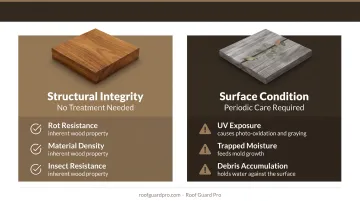
- Structural integrity: no treatment needed — Ipe's rot resistance, density, and insect resistance are inherent properties of the wood
- Surface condition: periodic care required — UV exposure causes photo-oxidation and graying; trapped moisture feeds mold; debris accumulation holds water against the surface
The Cost Argument for Preventive Care
Routine upkeep is inexpensive. A sodium percarbonate cleaner, a brightener, and a quality hardwood oil represent a fraction of what board replacement, full sanding, and professional refinishing cost. Prevention wins on cost because restoration is far more labor-intensive than routine maintenance.
Types of Ipe Wood Deck Care: What You Actually Need
Ipe care is simpler than most homeowners expect. The right approach depends on the deck's age, condition, and one key question: do you want to preserve the original warm brown color, or are you comfortable letting it weather to silver-gray naturally?
Routine Preventive Care
This is the baseline — and for many homeowners, it's enough.
- Sweep regularly to remove leaves, dirt, and organic debris from the surface and gaps between boards
- Hose down the deck periodically, especially after storms or heavy pollen seasons
- Clear standing water after rainfall — trapped moisture is the primary driver of mold and mildew on Ipe surfaces
- Keep planters elevated so water doesn't pool underneath them against the wood
This alone preserves structural condition. If you're happy with natural graying, you can stop here — the next tier only comes into play when color matters.
Cosmetic Maintenance (Cleaning + Oiling)
For homeowners who want to maintain Ipe's rich brown color, deep cleaning and oiling are performed once or twice a year. For homeowners who want to maintain Ipe's rich brown color, deep cleaning and oiling are performed once or twice a year. High-UV environments may call for more frequent treatment. DeckWise's Ipe Oil technical sheet recommends cleaning twice yearly, in spring and fall.
Oiling is not required for durability. It slows UV-related graying and enhances color depth — that's the full scope of what it does.
Corrective Restorative Maintenance
When a deck has moved past the cosmetic-maintenance window, a more hands-on approach is needed. This tier applies to neglected or heavily weathered boards — ones that have gone silver-gray, developed mold patches, or acquired surface roughness from years of exposure.
The process involves:
- A two-step cleaner-and-brightener treatment
- Light sanding with 80–120 grit sandpaper where surface unevenness remains
- A thin coat of UV-protective hardwood oil once fully dry
It's more labor-intensive than routine maintenance, but it can fully revive a weathered deck without board replacement as long as the boards aren't structurally compromised.
Signs Your Ipe Deck Needs Attention
Surface and Visual Warning Signs
These indicate routine maintenance is overdue but the situation is still DIY-manageable:
- Uneven gray patina — some boards have grayed while others haven't, creating a blotchy, inconsistent appearance
- Mold or mildew patches in shaded corners or areas with poor drainage
- Surface splintering or raised grain from UV exposure or prior pressure washing at excessive psi
- Dull or lifeless appearance even after sweeping — a sign of oil depletion and UV weathering
Structural Warning Signs
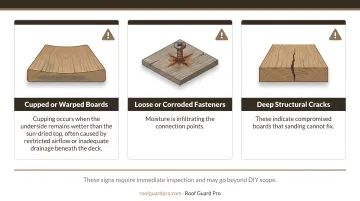
These require immediate inspection and may go beyond DIY scope:
- Cupped or warped boards — Brazilian Wood Depot notes that cupping occurs when the underside remains wetter than the sun-dried top, often caused by restricted airflow or inadequate drainage beneath the deck
- Loose or corroded fasteners — moisture is infiltrating the connection points
- Deep structural cracks (not superficial surface checking) — these indicate compromised boards that sanding cannot fix
When to Call a Professional
| Situation | Recommended Action |
|---|---|
| Minor graying, surface dirt, light mold, superficial surface checking | DIY maintenance |
| Persistent warping, widespread deep cracking, fastener failure, or uncertain structural safety | Get a professional assessment |
How to Clean, Oil, and Restore Ipe Wood Decking
Cleaning Your Ipe Deck
Preparation:
- Remove all furniture, planters, and rugs
- Sweep thoroughly, paying special attention to gaps between boards where debris collects and traps moisture
- Identify problem areas — mold patches, grease stains, or heavily discolored sections — before starting general cleaning
Choosing the Right Cleaner:
The product type matters. Here's what to use and what to avoid:
| Product | Use Case | Notes |
|---|---|---|
| Sodium percarbonate (e.g., OxiClean) | General cleaning, mold/mildew | Top recommendation — safe for dense hardwood fibers |
| TSP (Trisodium Phosphate) | Heavy oil or grease stains | Secondary option for targeted stain treatment |
| Household bleach | None | Avoid entirely — strips natural oils and destroys wood lignin |
Bleach damages lignin — the compound that binds wood fibers — raises the grain, and can corrode fasteners. It has no place in Ipe maintenance.
Cleaning Technique:
- Apply cleaner with a natural bristle brush or soft mop, always working with the grain — never cross-grain
- Let the solution dwell for 10–15 minutes without allowing it to dry on the surface
- Rinse thoroughly with clean water
On pressure washing: If used at all, Mataverde and AdvantageLumber both recommend a maximum of 1,200 psi with a wide fan nozzle. That said, a soft brush and garden hose is the safer, recommended alternative for Ipe — pressure washing can raise the grain and cause surface striping on dense hardwood.
Oiling and Sealing Ipe Wood
When to oil:
- After cleaning, once the deck is fully dry (typically 24–48 hours)
- As part of an annual or biannual cycle in high-UV environments
- When the goal is preserving or restoring brown color tones
New decks generally only need a light rinse before their first oil application unless visibly dirty from construction.
Application method:
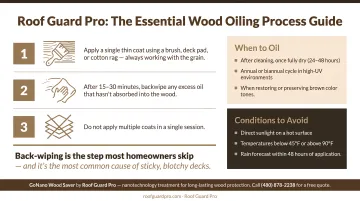
- Apply a single thin coat using a brush, deck pad, or cotton rag — always working with the grain
- After 15–30 minutes, backwipe any excess oil that hasn't absorbed into the wood
- Do not apply multiple coats in a single session
Back-wiping is the step most homeowners skip — and it's the most common cause of sticky, blotchy decks. Ipe's extreme density limits how much oil it can absorb at once. Excess oil sitting on the surface doesn't penetrate; it just creates a tacky film.
Conditions to avoid during oiling:
- Direct sunlight on a hot surface
- Temperatures below 45°F or above 90°F
- Rain forecast within 48 hours of application
For homeowners who want to reduce how often they repeat this process, professional treatments offer a longer-lasting alternative to annual oiling. Roof Guard Pro's GoNano Wood Saver applies a nanotechnology-based treatment that penetrates deep into the wood's surface pores, extending protection significantly between maintenance cycles. Call (480) 878-2238 to get a free quote.
Restoring a Weathered or Gray Ipe Deck
Step 1 — Two-step clean and brighten:
- Apply a sodium percarbonate cleaner to lift embedded dirt and mildew
- Follow immediately with an oxalic acid brightener to neutralize pH and restore the wood's natural tone
- This process alone recovers significant color without sanding in most cases
Step 2 — Sand only if needed:
- Use 80–120 grit sandpaper with a power sander, always following the wood grain
- Sand only after cleaning, only where surface unevenness or stubborn staining persists after brightening
- Remove all dust and allow the deck to dry completely before applying oil
Boards showing structural cracking, deep cupping, or significant warping should be replaced — sanding cannot fix wood that's been compromised below the surface.
Ipe Deck Maintenance Schedule and Seasonal Guidelines
No single schedule fits every deck. The right frequency depends on your sun exposure, local climate, and whether you want to preserve color or let the wood silver naturally.
| Condition | Cleaning Frequency | Oiling Frequency |
|---|---|---|
| High sun / full exposure | Spring + Fall | Every 6–12 months |
| Partial shade or covered | Annually | Every 12–24 months |
| Fully shaded / low UV | As needed | As needed (patina acceptable) |
These intervals assume standard oiling. When a professional-grade nano-coating like GoNano Wood Saver has been applied, cleaning and reapplication cycles can stretch well beyond the ranges above — Roof Guard Pro can assess your deck's specific condition and advise on timing.
Fall priorities:
- Clear leaves and debris before winter; trapped organic material is the leading cause of mold buildup and surface staining
- Check gap clearance between boards and ensure drainage paths are unobstructed
Spring priorities:
- Inspect for loose fasteners and cupped boards after winter freeze-thaw cycles
- Deep clean if needed
- Decide whether oiling is desired for the season
New vs. established decks:
- New decks (under 2 years): Light rinse before first oil application; skip the full cleaning process unless visibly dirty
- Established decks (2+ years): Run the full clean-and-brighten process before oiling if graying or dirt has built up
- Neglected decks (5+ years without care): Complete a full restoration first, then return to a regular schedule
Frequently Asked Questions
How do you maintain an Ipe deck?
Sweep regularly to prevent moisture and debris buildup, periodically deep clean with a sodium percarbonate cleaner, and optionally apply a UV-protective hardwood oil once or twice a year to preserve color. The wood's durability doesn't depend on this routine — it's primarily about keeping the surface looking its best.
Does Ipe decking need to be sealed or oiled?
Sealing and oiling are optional and cosmetic. Ipe's natural oils and extreme density keep it structurally sound without any treatment. Applying a UV-protective oil finish once or twice a year will slow graying and keep the deck looking warm and rich.
What happens if you don't maintain Ipe wood decking?
Structurally, nothing critical happens. Ipe retains its strength, rot resistance, and insect resistance without maintenance. Cosmetically, the deck will naturally weather to a silver-gray patina over time — which many homeowners prefer for its clean, weathered look.
How often should you clean and oil an Ipe deck?
Every 6–12 months for high-sun or coastal environments, and every 12–24 months for shaded or covered decks. Personal color preference plays a role too — if you want to preserve the warm brown tone, more frequent oiling is worthwhile.
Can you pressure wash Ipe wood decking?
It's not recommended as standard practice. Pressure washing can strip surface oils, raise the grain, and cause visible striping on dense hardwood fibers. If you use one, keep pressure at or below 1,200 psi with a wide fan nozzle, and maintain distance from the surface.
How do you restore a gray or weathered Ipe deck?
Start with a sodium percarbonate cleaner, then follow with an oxalic acid brightener to lift the gray and restore the wood's natural tone. Sand lightly (80–120 grit) only if unevenness remains, then apply a thin coat of UV-protective hardwood oil once the surface is fully dry.