The consequences of ignoring this reality are costly. Shingles that lose their oils dry out, crack, and shed granules — turning a $500 maintenance issue into a $30,000+ replacement. According to the JLC 2025 Cost vs. Value Report, asphalt shingle roof replacement averages $31,871 nationally, with homeowners recouping only about 68% of that cost in resale value.
This guide covers why Colorado's climate is uniquely destructive, how to spot early warning signs, and the proven maintenance and protection strategies that can add years — or even a decade — to your roof's service life.
Key Takeaways
- Architectural shingles rated for 30 years often fail early under Colorado's UV, hail, and freeze-thaw conditions
- UV exposure depletes shingle oils over time — replenishing them is the most effective way to slow deterioration
- Bi-annual inspections (spring and fall) plus post-storm checks catch damage before it turns structural
- Attic ventilation prevents ice dams in winter and heat-baked shingles in summer
- One professional shingle rejuvenation treatment can add 10–15 years to roof life, at a fraction of replacement cost
Why Colorado's Climate Accelerates Asphalt Shingle Aging
Colorado isn't just another cold state with some hail. Four distinct climate stressors — UV radiation, temperature swings, hail, and snow — hit asphalt shingles year-round, each compounding the damage the others cause.
High-Altitude UV Exposure
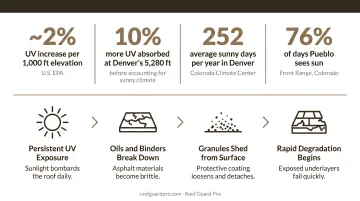
According to the EPA, UV radiation increases roughly 2% for every 1,000 feet of elevation. Denver sits at 5,280 feet — meaning shingles there absorb approximately 10% more UV than at sea level, before factoring in Colorado's sunny climate. The Front Range city of Pueblo sees sun on 76% of days, and Denver averages around 252 sunny days per year based on Colorado Climate Center data.
This persistent UV exposure breaks down the oils and binders within asphalt shingles, making them brittle, prone to cracking, and unable to hold their protective granule coating. The ceramic granules that manufacturers embed in shingles exist specifically to shield the asphalt underneath. Once those granules shed, degradation moves fast.
Temperature Swings and Freeze-Thaw Damage
NWS Denver records document a 66°F single-day temperature change since record-keeping began in 1872, and a 76°F two-day swing. This isn't a freak occurrence — wide daily ranges are routine throughout Colorado's shoulder seasons.
Every temperature swing makes shingles expand and contract. Over time, this mechanical stress creates micro-cracks at seams and along shingle edges.
Once water finds those cracks and temperatures drop below freezing, the freeze-thaw cycle takes over: water expands as it freezes, widening cracks, then contracts when it thaws. Repeat this hundreds of times through fall and winter, and a hairline fracture becomes a water infiltration point.
Hail — Colorado's Primary Roof Aging Driver
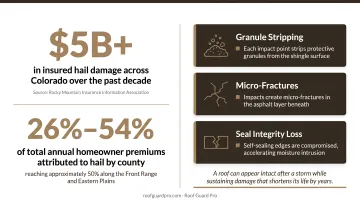
Hail is the single biggest roof-aging risk on the Front Range. The Rocky Mountain Insurance Information Association reports that Colorado sustained more than $5 billion in insured hail damage over the past decade. The Colorado Division of Insurance found that hail accounts for 26% to 54% of total annual homeowner premiums by county — reaching approximately 50% along the Front Range and Eastern Plains.
Even moderate hail events do measurable damage. Each impact point can:
- Strip protective granules from the surface
- Create micro-fractures in the asphalt layer
- Compromise the self-sealing integrity of shingle edges
The roof can look superficially intact after a storm while sustaining damage that shortens its life by years.
Ice Dams and Snow Loads
Denver averages 56.6 inches of seasonal snowfall; mountain communities like Breckenridge and Vail average 175–190 inches annually. When attic heat escapes through a poorly ventilated roof, it melts the bottom layer of snow. That meltwater runs down to the eaves, refreezes, and builds an ice dam that forces water back under shingle edges.
NWS confirms that proper attic ventilation keeps attic air cold enough to prevent or minimize this freeze-thaw cycle at the roof surface. In practical terms, that means maintaining attic temperatures within 10°F of outside air — a threshold most Colorado homes with inadequate soffit-to-ridge airflow don't reach.
Warning Signs Your Colorado Asphalt Shingles Need Attention
Catching problems at the warning stage costs far less than emergency repairs. Here's what to look for:
Granule Loss and Bare Spots
Check your gutters and downspouts after rainstorms. Finding a significant volume of granules — small, sand-like particles — is a red flag. According to GAF, initial granule loss on new shingles can be normal, but ongoing or heavy loss after the first several months indicates a problem, particularly if the roof is changing color or showing other visible damage.
Bare patches on shingles mean the asphalt layer is directly exposed to UV and moisture. In Colorado's high-UV environment, exposed asphalt can break down within a single season.
Cracking, Curling, or Brittleness
Shingles that curl upward at the edges (called "cupping") or crack lengthwise have lost their oil content and flexibility. Owens Corning identifies these as clear indicators that intervention is needed:
- Cupped or curled shingle edges
- Lengthwise surface cracking
- UV-bleached or color-faded sections
In Colorado, this pattern typically appears in roofs older than 10–12 years due to the intensity of UV exposure.
Brittle shingles are also vulnerable to blow-off in high winds — a serious structural risk during Colorado's frequent windstorms.
Visible Daylight or Water Stains in the Attic
Water stains on attic decking or insulation, or visible daylight through roof boards, signal existing breach points. These need immediate professional attention before the next snow event drives water deeper into the structure.
Flashing and Sealant Deterioration
Cracked or separating flashing around chimneys, skylights, and vents is among the most common water entry points in Colorado homes. Freeze-thaw cycling repeatedly stresses sealants and caulking around penetrations, loosening them gradually. Check these areas closely every spring after snowmelt. Spotting these warning signs early gives you options — restoration treatments, targeted repairs, or timely replacement — before minor issues become major damage.
Proven Ways to Extend Asphalt Shingle Roof Lifespan in Colorado
Extending shingle life in Colorado takes a layered approach — routine upkeep, proactive protection, and prompt corrective action.
Routine Preventive Maintenance
Schedule bi-annual professional inspections — once in spring after snowmelt, once in fall before the freeze season — plus an additional check after any significant hail event or windstorm. Each inspection should cover:
- Shingle condition (granule retention, cracking, curling)
- Flashing integrity around all penetrations
- Gutter and downspout drainage functionality
- Attic ventilation and moisture signs
Key DIY upkeep tasks:
- Clean gutters at least twice a year to prevent ice dam conditions and water backup
- Remove debris (leaves, pine needles, branches) from the roof surface — trapped moisture accelerates shingle deterioration
- Trim overhanging branches before monsoon season to prevent abrasion and debris accumulation
Protective Shingle Treatments
One of the most effective, and least used, strategies for extending shingle life is professional oil replenishment. As UV exposure and thermal cycling break down the natural oils in asphalt, shingles become rigid, crack-prone, and unable to hold their protective granules. Restoring those oils extends shingle flexibility and weather resistance.
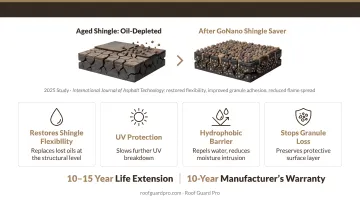
A 2025 study published in the International Journal of Asphalt Technology documented that oil-based rejuvenation treatments restored flexibility, improved granule adhesion, and reduced flame spread in aged shingles compared to untreated controls.
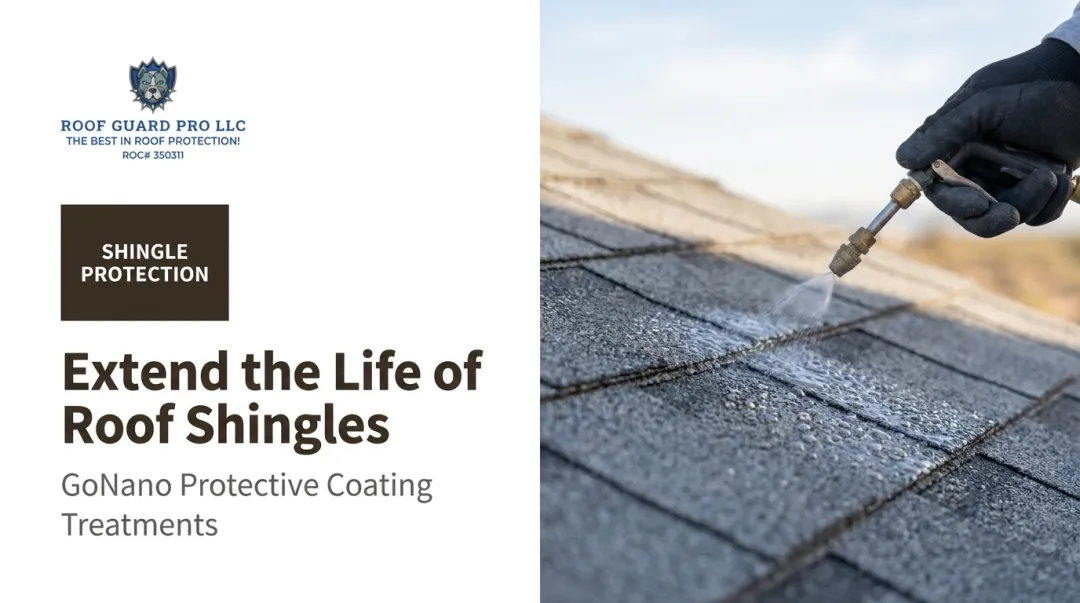
Roof Guard Pro applies GoNano Shingle Saver, a nanotechnology-based treatment that works differently from conventional surface sealants. GoNano's nanoparticles penetrate deep into asphalt pores rather than coating the surface — restoring lost oils at the structural level rather than masking deterioration.
The treatment delivers four measurable protections:
- Replaces lost oils to restore shingle flexibility
- Adds UV protection to slow further breakdown
- Improves hydrophobic properties to repel water
- Stops ongoing granule loss
One application is designed to extend roof life by up to 10–15 years and is backed by a 10-year manufacturer's warranty.
Corrective Repairs — Act Fast
In Colorado, small vulnerabilities compound quickly. A missing shingle or separated flashing joint that's a minor nuisance in a mild climate can become a freeze-thaw failure point causing water infiltration within weeks.
The NRCA recommends prompt repair by an experienced roofing contractor whenever inspections reveal needed work. Repairs made within days or weeks of discovery are far less expensive than water damage remediation months later.
Common repairs that should never wait:
- Missing or lifted shingles after windstorms
- Separated or cracked flashing at chimneys, vents, or skylights
- Visible granule loss concentrated in specific zones
Optimize Attic Ventilation and Insulation
Balanced attic ventilation — equal intake and exhaust airflow — serves two distinct functions in Colorado:
- Summer: Prevents heat buildup that bakes shingles from underneath. ARMA notes that poor ventilation can drive attic temperatures to 140°F on a 90°F day, directly distorting shingles and accelerating degradation
- Winter: Keeps attic air cold enough to prevent the warm-air conditions that trigger ice dam formation
The IRC (R806.2) sets a minimum of 1/150 net free ventilating area as the standard, with an exception allowing 1/300 under specific conditions. The FHA recommends 1 sq ft of ventilation per 300 sq ft of attic space, split evenly between intake and exhaust. Confirm insulation baffles are clear so soffit vents aren't blocked.
Seasonal Maintenance Schedule for Colorado Homeowners
Colorado's four seasons each present specific threats to asphalt shingles. This schedule keeps you ahead of them.
| Season | Priority Actions |
|---|---|
| Spring | Professional inspection for winter/hail damage; clean gutters of winter debris; check attic for moisture stains; assess granule loss |
| Summer | Trim overhanging branches before monsoon season; inspect sealant and flashing around all penetrations; evaluate whether a shingle rejuvenation treatment is appropriate for aging roofs |
| Fall | Clean gutters and downspouts thoroughly; repair any loose or missing shingles before freeze season; verify attic insulation and ventilation are functioning correctly |
| Winter | Monitor eaves for ice dam formation after heavy snowfall; avoid walking on frozen shingles; use a long-handled roof rake to remove excess snow from lower sections if loads become excessive. FEMA recommends leaving at least 2 inches of snow in place to protect the roof membrane. |
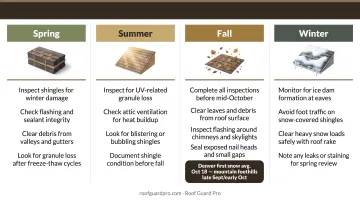
Denver's first measurable snow averages October 18, and mountain foothills typically see first snow in late September or early October. Fall maintenance should be complete before mid-October in most Colorado communities.
Conclusion
Extending an asphalt shingle roof's lifespan in Colorado is achievable, but it requires treating the state's climate as the specific, compounding threat it is rather than applying generic maintenance routines designed for milder regions.
The combination of bi-annual professional inspections, prompt reactive repairs, proper attic ventilation, and proactive shingle protection treatments gives Colorado homeowners the best odds of pushing their roofs toward the upper end of their potential lifespan.
For aging roofs, nano-coating treatments like GoNano Shingle Saver offer a compelling alternative to premature replacement, delivering significant savings compared to full replacement and backed by a 10-year manufacturer warranty.
Frequently Asked Questions
How long do asphalt roofs last in Colorado?
Three-tab shingles typically last 15–20 years; architectural shingles can reach 20–30 years under manufacturer estimates. Colorado's altitude-intensified UV, frequent hail, and freeze-thaw cycles push lifespans toward the lower end of those ranges, but proactive maintenance can help roofs reach their upper limits.
Can you extend the life of asphalt shingles?
Yes. Consistent maintenance — bi-annual inspections, prompt repairs, balanced attic ventilation, and shingle rejuvenation treatments that replenish lost oils — can add a decade or more to a roof's service life. Starting treatment before significant deterioration sets in yields the best results.
What is the 25% rule for roofing?
The 25% rule is a guideline suggesting that if more than 25% of a roof's surface is damaged or deteriorated, full replacement is more cost-effective than partial repairs. Some Colorado municipalities follow this standard, making it a practical decision framework after major hail events.
Is October too late to get a new roof in Colorado?
October is generally still feasible, as experienced contractors can install shingles in cool temperatures. However, Denver's first measurable snowfall averages October 18, and foothills communities can see significant snow earlier, so homeowners should act quickly to avoid weather delays or frozen decking complications.
How often should I inspect my asphalt shingle roof in Colorado?
At minimum, twice yearly — spring and fall — plus an inspection after any significant hail or windstorm. Colorado's storm frequency makes post-event checks especially important for catching granule loss and flashing damage before moisture infiltrates the structure.
What type of asphalt shingles hold up best in Colorado's climate?
Architectural (dimensional) shingles outperform standard three-tab shingles due to their thicker profile. For hail-prone areas like the Front Range, Class 4 impact-resistant shingles (rated under UL 2218) offer the best protection — and State Farm lists Colorado among states where Class 4 installations may qualify for home insurance discounts.